6/11/2009

Guide to Gerry Dawes's Spain: Customized Culinary Tours, Epicurean Ways Scheduled Tours, Photography, Articles and Current Postings

* * * * *


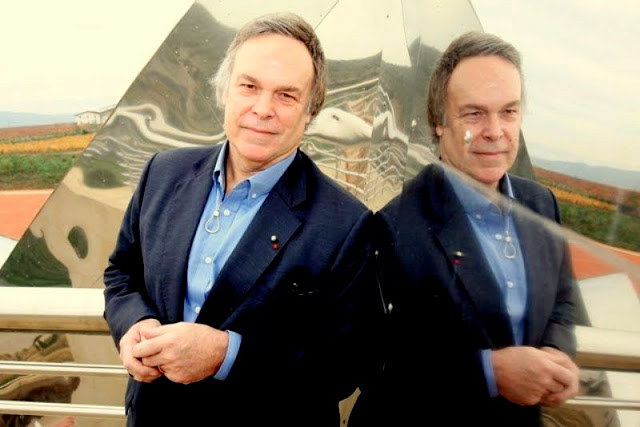
Gerry Dawes & Lucio Blázquez, owner of Casa Lucio in Madrid, during Madrid Fusión week, January 2009.
Photograph by John Sconzo ©2009.

Customized Tours:


For Scheduled Tours, Go to Epicurean Ways:


Photography:


Guide to Gerry Dawes's Spain & Recent Posts & Articles:


- - Innovation vs. Tradition in Spanish Cuisine


9/01/2008 Food Arts Over the Foaming Wave Article on Ferran Adriá

8/15/2008 Spain’s Surprising Terroir-Driven Reds: Slate-laced Glories

8/04/2008 Some men are born out of their due place

7/12/2008 Navarra: A Spanish Kingdom's Wines Wear the Versatility Crown

7/02/2008 Mencía: Terroir and Balance Mark Spain's Next Great Red Variety

6/12/2008 The Surprising Wines of Valencia - Spain - U.S. Chamber of Commerce Gala Issue

5/10/2008 Foods From Spain News Interview with Chef & TV Personality José Andrés at Madrid's Salón Internacional de Gourmets

1/17/2008 Spain’s Food & Wine Fairs: A Perpetual Feast

11/07/2007 The Great Don Pohren: His Passing & His Significance

4/20/2007 Galicia’s Green Gold: White Wines from Native Spanish Grapes

About Gerry Dawes

Gerry Dawes was awarded Spain's prestigious Premio Nacional de Gastronomía (National Gastronomy Award) in 2003. He writes and speaks frequently on Spanish wine and gastronomy and leads gastronomy, wine and cultural tours to Spain. He was a finalist for the 2001 James Beard Foundation's Journalism Award for Best Magazine Writing on Wine. And in 2004, he was awarded First Prize for Journalism on Cava (Spanish sparkling wine) by the Cava Institute .

Gerry Dawes has been traveling in Spain for more than 35 years with over 100 (60 in the past decade ) extensive food and wine trips to Spain. He has been cited for his knowledge of Spain in The New York Times and New York Times Magazine, New York Newsday, The Wine Spectator, The James Beard Foundation Newsletter, Food Arts, Men's Journal, and Spain's El País, El Mundo, Cambio 16, and Restauradores. Dawes has led numerous culinary and wine tours to Spain. His clients have included The World Trade Center Club, Club Managers of America Wine Society, Chef Mark Miller and his management team, the mythical 61st Tactical Fighter Squadron and The Commonwealth Club of California.

video

EO Agency pilot for a reality television series

on wine, gastronomy, culture and travel in Spain.

Gerry Dawes can be reached at gerrydawes@aol.com.


Posted by Picasa

6/10/2009

Gerry Dawes's Customized Insider's Tours

Experience Gerry Dawes's Spain
* * * * *
"In his nearly thirty years of wandering the back roads of Spain," Gerry Dawes has built up a much stronger bank of experiences than I had to rely on when I started writing Iberia...His adventures far exceeded mine in both width and depth..." -- James A. Michener, author of Iberia: Spanish Travels and Reflections

* * * * *

Spanish Travel Consulting/Custom Tour Planning

Culinary, Wine, Cultural & Photographic Tours

Customized especially for you & your group
* * * * *
For Scheduled Tours, Go to Epicurean Ways:

"Gerry has an extraordinary knowledge of Spain, not just the cuisine and wine but the geography (little tapas bars on tiny streets in villages up in the mountains), history, culture and people. One of the highlights of the trip for me was not a 3-star Michelin meal, but a lunch at a winery. Gerry, of course, knew the winemaker, and we dined in a large beautiful room with floor-to-ceiling windows overlooking the vineyard. We ate simply: tomato salad, jamón ibérico, great bread and olive oil, baby lamb chops grilled over grape vines cuttings (exquisite), ewes’ milk cheese and, of course, great wine. What was special about this was the people, who invited us into their home with warmth and genuine hospitality, their alegría de vida (joie de vivre). I don’t speak Spanish but didn’t have too, we communicated through food, wine, banter, laughter and facial expressions." - - Terrance Brennan, Chef, cookbook author, creator-owner of New York’s Picholine and Artisanal restaurants. Brennan rates this trip, which predates the film pilot, as one of the top two gastronomic experiences of his life.

* * * * *

(Double click on tour advertisement to enlarge.)

* * * * *

Gerry Dawes has been traveling in Spain for more than 35 years with over 100 (60 in the past decade ) extensive food and wine trips to Spain. He has been cited for his knowledge of Spain in The New York Times and New York Times Magazine, New York Newsday, The Wine Spectator, The James Beard Foundation Newsletter, Food Arts, Men's Journal, and Spain's El País, El Mundo, Cambio 16, and Restauradores. Dawes has led numerous culinary and wine tours to Spain. His clients have included The World Trade Center Club, Club Managers of America Wine Society, Chef Mark Miller and his management team, the mythical 61st Tactical Fighter Squadron and The Commonwealth Club of California.

* * * * *

EO Agency Pilot Video of Proposed 7 Days, 7 Nights Television Series
with Gerry Dawes (& Guest Chef Terrance Brennan)


video

(Click on arrow to play video.)

Testimonials on Gerry Dawes's Spain Expertise

"I have been reading Gerry Dawes’ work on Spain for years, have been guided by him on visits to Spain, depend on him to answer any questions I might have about Spain, and hear from him when I get something wrong about Spain. No one is a more indefatigable lover and authority about his adopted country, and no one writes better about its food and wines."- -John Mariani, Mariani's Virtual Gourmet Newsletter; columnist for Esquire, Wine Spectator, Bloomberg News and Radio, and Diversion. He is author of The Encyclopedia of American Food & Drink (Lebhar-Friedman), The Dictionary of Italian Food and Drink (Broadway), and, with his wife Galina, the award-winning Italian-American Cookbook (Harvard Common Press).

"My first introduction to Spanish cuisine was a fabulous two-week trip I took all around Spain with Gerry Dawes in 1990." -- Thomas Keller, Chef-owner, The French Laundry, Per Se, Bouchon, Bouchon Bakery.

"As with most culinary adventures, for Terrance Brennan (Chef-owner of New York City's Picholine and Artisanal restaurants; Founder of Artisanal Premium Cheese Center) it began as an occasional whisper. Then it became a persistent drone. And, finally a repetitive shout: 'Spain! Go to Spain! . . . Spain is the new France!' It was hard to ignore, so when his long-time friend Gerry Dawes suggested a whirlwind gastronomic tour of Spain, Terrance leapt at the idea. Dawes often referred to as 'Mr. Spain' (in culinary and wine circles), is an expert on that country's food, wine, and culture, and was the ideal person with whom to make the pilgrimage. Reigning in Spain: Blazing Through a Culinary Tour, The Artisanal Table, Summer 2008.

"Going to Spain with Gerry Dawes as Janet and I have done is one of the greatest ways imaginable to take in what is white-hot or classic regarding all things gastronomia. Treat yourself and those you love to the real insider's tour and join the Gerry tapeo!"--Norman Van Aken, "The Father of New World Cuisine, "Chef, Author, Restaurateur

"I have taken ten trips to Spain, but the best trip was the one Gerry Dawes orchestrated. His love and knowledge of the foods and wines of Spain are intoxicating. His ever present enthusiasm made my Spanish experiences with him memorable." - - Mark Miller, Chef/owner, Coyote Cafe (Santa Fe, New Mexico), winner of the James Beard Foundation's Southwestern Chef of the Year Award 1996.

"Just wanted to send you a big THANK YOU for the world's greatest two-hour tour of Madrid. From the boquerones to the capes to the good company, we loved every minute! Hope to have the pleasure of seeing you again soon...on any continent. With appreciation." Karen Page and Andrew Dornenburg, James Beard Award-winning co-authors of BECOMING A CHEF, CULINARY ARTISTRY, DINING OUT, CHEF'S NIGHT OUT, THE NEW AMERICAN CHEF, WHAT TO DRINK WITH WHAT YOU EAT, THE FLAVOR BIBLE and ON MASTERING WINE (forthcoming from Little, Brown), Web: www.becomingachef.com

Commonwealth Club of California

A Taste of Spain Tour October 2006


(Click on the arrow to activate slideshow, click on the lower left corner box to turn captions on or off; double click on the image box to go to a Picasa webpage where, by clicking on "slideshow," you can see the images enlarged full frame.)

Testimonials from The Commonwealth Club Taste of Spain Tour 2006

"Wow! What a trip!!! It was everything we hoped for and so much more--we very much enjoyed it. This has been one of the best trips we've ever taken and believe me, we've had a blast in the past! We hope to join up with you on a tour Southern Spain. Until then." Jo & Linda Rubino

"Thanks so much for guiding us thru Spain and showing us your unique insider's view-it was a taste of Spain in more many ways than food and wine although that part was fantastic. We could never have had the experience ofthe country without your efforts and expertise.We believe(as do Tom andCarol) that your knowledge as well as the friendships that you have developed is a unmatched asset." All the best,Celia and Steve Rosen, New York

"Carol and I are still a bit woozy in the head from the time difference but we have been talking nonstop about our great trip and how it exceeded our expectations. Thanks for the adventure and getting us access to the best wineries and restaurants in from Madrid to Barcelona. Again thanks for everything." Thomas H. Burkhart, CEO, The Savant Group, San Francisco, CA

"Lars and I just got home from Spain. Wanted to tell you again how memorable you made the tour of Spain and how much we enjoyed the great restaurants, wineries and people you were able to gather together for the group." Carol Vistnes, San Francisco

"Thanks for the tour! Mercedes (Lopez de Heredia, La Rioja) and the cooperage will always be remembered as will the "boat" trip (the ferry to Casa Camara in Pasajes de San Juan) and meal in San Sebastian (at three-star Michelin Arzak). Thanks for a wonderful trip. This one is the best ones ever for me. We would like to take another trip with you next year." Jim & Anastasia Brown, San Francisco

For customized trips, contact Gerry Dawes--based in New York--with desired dates, areas of interest in Spain (gastronomy, wine, art, history, culture, etc.), specific sights you might like to see, number of possible travelers; and an estimated budget for your group.

gerrydawes@aol.com

Alternate e-mails (use only if your e-mail to AOL is rejected):
http://gerrydawes@hotmail.com/

Phone: 914-414-6982
Teléfono movíl (during stays in España): (011 34) 670 67 39 34

Website: Gerry Dawes's Spain: An Insider's Guide to Spanish Food, Wine, Culture and Travel.

6/09/2009

Maestro Spain: Photographs of Spain & Assignment Photography by Gerry Dawes

* * * * * *
In these times of crisis, photo acquisition budgets have been cut. Art directors and photo editors often cannot afford to send a photographer to cover stories in Spain on gastronomy, wine, popular culture and tourist sights, but that doesn’t mean that you can’t have access to top quality, original photographs of Spain, Spanish travel, Spanish gastronomy, Spanish wine and many, many other subjects covering a broad range of activities (see samples below). And, since I travel in Spain as many as eight times each year, an assignment often does not require re-imbursement for air travel.

(Click on the arrow to activate slideshow, click on the lower left corner box to turn captions on or off; double click on the image box to go to a Picasa webpage where, by clicking on "slideshow," you can see the images enlarged full frame.)

Based in New York's Hudson River Valley, I am Gerry Dawes, an award-winning writer-photographer, who has been traveling or living in Spain for forty years. I have thousands of high quality digital photographs and a library of thousands of transparencies going back more than two decades on a multitude of Spanish subjects. I have published hundreds, if not thousands, of photographs in such publications as Food Arts, The Wine Spectator, The Wine News, The Wine Enthusiast, Santé, Decanter, Saveur and The New York Times. I have had had cover and full-page shots for The Wine Spectator, Wine Enthusiast and Wine News and I have photographs in several books. Numerous photographs of mine can be see with my articles on this blog, on Verema.com and on the new Culinary Institute of America-Greystone website dedicated to Spain.

My stock includes thousands of photographs of Spain, taken on an average of seven trips per year to Spain over the past decade.

Available subjects include (see slide shows below for samples of my work):

Spanish cocina de vanguardia chefs (Ferran Adri , Arzak, Roca, Dacosta and scores of others), their restaurants and hundreds of dishes.

Spanish traditional cuisine chefs, restaurateurs, restaurants, restaurant façades and dishes (roast suckling lamb, pig, shellfish, rich dishes, vegetable dishes, etc.)

Market photos from Madrid, Barcelona’s La Boqueria, San Sebastián’s La Bretxa, Valencia’s Mercat Central, Mercado de Jerez and others; fish markets; farmer’s markets; gourmet shops; and food producers.

Spanish products such as olive oil (and production); hundreds of artisan cheeses (cheesemaking operations and animals that provide the milk); rice, paprika and saffron.
Wine, wineries and vineyards from almost every denominación de origen, many of which are isolated or little-known; Spanish wine personalities, star winemakers and little-known winemakers; closeups of wine glasses.

Christian and Moorish Castles, ancient synagogues, Roman ruins, cathedrals and village churches, monuments, museums, statues, works of art, train stations, airports.

Landscapes: mountains, plains and seacoast.

Street photography, including street performers (hundreds of human statues and musicians.)

If you don’t see it in this general listing, ask, chances are Dawes's archives may have what you are looking for to illustrate your articles and advertisements.

Dawes is also available for assignments and the fact that he is so often in Spain–leading tours, attending and speaking at conferences or just traveling and taking photographs–can mean that the customer may not have the expense of my airfare.

Slide shows of sample photographs:

(Note to potential publishers: These photographs represent only a cross-section of my photographs of Spain, drawn from my large archives of digitals and from thousands of transparencies taken over many years. No photographs are to be reproduced or used without payment, photographer's copyright credit and explicit written consent from the photographer.)

Spain: General


Spanish Gastronomy: Chefs, Restaurants, Dishes, Products


Spanish rice dishes


Spanish wine


Street Performers in Spain


All photographs taken with Canon cameras and Tokina 12-24mm f4, Sigma 17-70mm f2.8-4.5, Canon 50mm f1.4, Canon 50mm Macro f2.5 and Canon 70-200mm f4 'L' lenses.

About Gerry Dawes

". . . Gerry Dawes, the gastronomy/travel writer-photographer known for good reasons in wine and periodical circles as ‘Mr. Spain." An inexhaustible fund of knowledge on his favorite subject . . . " - - Michael & Ariane Batterberry, Publishers of Food Arts

Spanish National Gastronomy Prize: 2003 Marques de Busianos Award from the Spanish Academy of Gastronomia y La Cofradia de la Buena Mesa for activities (writing, photography, lectures) on behalf of Spanish gastronomy and wines.

Gerry Dawes was born in Alto Pass, Illinois (pop. 300) and lived in Spain for eight years in sherry country (Cádiz), in Sevilla, and in Mijas (Malaga) and has been traveling there for forty years. He represented the late American artist-matador John Fulton in Sevilla and Marbella; apprenticed under Robert Vavra, photographer of James Michener's Iberia; ran The Dawes Gallery, a contemporary art gallery in Mijas, and studied Spain's language, history, and culture at the University of Sevilla (in the former Fábrica de Tabaco--made famous as the setting of the opera Carmen). Dawes has a B.A. in Spanish and Creative Writing from State University of New York (SUNY).

An avid aficionado of Spanish fiestas and a photographer, Dawes traveled extensively in Spain during the eight years he lived there, putting muchos kilómetros on Rocinante, his Volkswagen sedan. He amassed thousands of color transparencies and a wealth of knowledge about the country, its wine and food, customs and culture. Since that time, he has returned to Spain nearly 100 times on gastronomy, wine and photography missions. He has also led nearly a dozen customized culinary and wine tours to Spain.


video

Mr. Dawes is currently working on a reality television
series on wine, gastronomy, culture and travel in Spain.
(Video currently unavailable to do a feeder site failure, back by Feb. 3)

Experience Spain With Gerry Dawes: Culinary Trips to Spain & Travel Consulting on Spain

Gerry Dawes can be reached at gerrydawes@aol.com; cell phone: 914-414-6982

Alternate e-mail (use only if your e-mail to AOL is rejected): gerrydawes@hotmail.com

6/08/2009

Homage to Iberia: Adventures with Gerry Dawes in Spain

* * * * *
* * * * *
Images of Gerry Dawes's Homage to Iberia:
* * * * *
A Sequel to James A. Michener's Iberia: Spanish Travel & Reflections
* * * * *
Foreword to Homage to Iberia
by James A. Michener

"Your long letter about your relationship to my book, Iberia: Spanish Travels and Reflections has finally caught up with me, and it has touched me deeply. I have received in these later years some dozen letters each year in which someone of apparent good sense and writing skill - - and, in your case, long experience in Spain - - qualified them to make value judgements.

A person like me who writes in solitude, rarely sees his readers and profits from specific contact with them. I had been waiting for a letter like yours to come in so that I could respond to it in some detail, and I found in your account of your travel adventures in Spain over a span of nearly thirty years to be what I wanted. I could have used the story of a Canadian who read my book on Japanese prints and decided to go to Japan and become a woodblock artist. He did, and with outstanding success. Or the people who went into archaeology because I made it so attractive, or the lovable ones of the lot, those who simply caught the travel lust from reading my books and went off hightailing it through the world. I hear from them all and from a very wide spread of countries.

But, your letter was of a different quality in that you specified how Iberia affected you and what specifically you did about it. You were fresh off a four-year hitch in the Navy during the Vietnam period, standing at the farewell gate at U.S. Naval Headquarters in Rota, Spain, with $500 bucks in your pocket and a determination to see Spain as intimately as this writer guy Michener had done in his youth. Your adventures far exceeded mine in both width and depth. Truly you had a basketful of experiences that made me envious: art gallery manager, college stints at the University of Seville in the old tobacco factory of Carmen, marriage to lovely backpacker from Michigan whom you met in Andalucia, tour guide to back country Andalucian villages, Spanish wine and food expert, and a plunge into the world of adventure, art, history, and bullfighting that I’d described in Iberia.

I was impressed by your story about how you and your new friend John Fulton were stuck in Sevilla without a dime between you as the Fiestas de San Fermín at Pamplona approached on the 7 of July for eight wild days, and how you met a large group of affluent-looking American college students in Sevilla’s labyrinthine streets and arranged an impromptu tapas and sangría party at your house in the Barrio de Santa Cruz, the old Jewish Quarter, so they could meet Fulton and buy copies of his artwork. You earned enough money that night to permit you both to scurry off to Pamplona, where you met many of the characters in Iberia, joined in their wonderful tertulias, and had your hair-raising adventure in the encierro, the running of the bulls. That story and the way you told it made me think that you would be a pretty fair writer. In your thirty years of "wandering the back roads of Spain," you have built up a much stronger bank of experiences than I had to rely on when I started writing Iberia.

It was good to hear of your intellectual adventures as well and I am honored that Iberia had such a profound effect on your life and writings. Do you realize that because of the time you spent in Spain, both in the Navy and in those early years after your discharge, that you knew those characters of Pamplona and Sevilla and the bullfight aficionados better than I ever did? And what a scintillating group they were, and how privileged we both were to have know them. I am flattered that I have inspired you to pick up where I left off and write Homage to Iberia. The continuing saga of Spain, its people, and the wonderful characters who love this vibrant country deserves to be told.

James A. Michener
Austin, Texas
January 1996

About Gerry Dawes

Gerry Dawes was awarded Spain's prestigious Premio Nacional de Gastronomía (National Gastronomy Award) in 2003. He writes and speaks frequently on Spanish wine and gastronomy and leads gastronomy, wine and cultural tours to Spain. He was a finalist for the 2001 James Beard Foundation's Journalism Award for Best Magazine Writing on Wine.


video


Mr. Dawes is currently working on a reality television
series on wine, gastronomy, culture and travel in Spain.

Experience Spain With Gerry Dawes: Culinary Trips to Spain & Travel Consulting on Spain

Gerry Dawes can be reached at gerrydawes@aol.com; Alternate e-mail (use only if your e-mail to AOL is rejected): gerrydawes@hotmail.com

6/07/2009

Canary Islands Fish - Available in the Markets of Las Islas Canarias

Slide show - Click on the arrow. Double click to go to Picasa page for a full-screen view.


About Writer-Photographer Gerry Dawes

Gerry Dawes was awarded Spain's prestigious Premio Nacional de Gastronomía (National Gastronomy Award) in 2003. He writes and speaks frequently on Spanish wine and gastronomy and leads gastronomy, wine and cultural tours to Spain. He was a finalist for the 2001 James Beard Foundation's Journalism Award for Best Magazine Writing on Wine. His articles and photographs have appeared in scores of publications .

video

Mr. Dawes is currently working on a reality television

series on wine, gastronomy, culture and travel in Spain.

Experience Spain With Gerry Dawes: Culinary Trips to Spain & Travel Consulting on Spain

Gerry Dawes can be reached at gerrydawes@aol.com; Alternate e-mail (use only if your e-mail to AOL is rejected): gerrydawes@hotmail.com

Lampreia: Eating Lamprey Eel Along the Minho River in Southern Galicia

My friend, John Gottfried of Devour.tv, hadn’t come to Galicia in northwestern Spain to try lampreia. He'd come hoping to find bulots, one of the 100 Dishes You Have To Try Before You Die.


Bulot is a species of large sea snail that combines the taste of abalone, with a mid-body tasting like snail and a tail like foie gras. . . which at $5 a bowl it is one of the unsung, unknown bargains of a trip to the French Atlantic Coast.

But, bulot don’t seem to thrive in the waters off Galicia so I tempted Gottfried with tales of centolla spider crabs, cigalas–Dublin Bay prawns--and lamprey eels cooked in a sauce of their own blood.


Lampreia eels

Now any sensible person would not seek out lampreia, a blood-and-flesh sucking eel-like creature that hitches parasitic rides on salmon and other fish as they come up-river to spawn. We are soon going to eat one of these frightening creatures!

The Minho River is the Spanish-Portuguese border. It is considered international waters and is the only part of Europe where it is allowed to net-harvest lampreia. Elsewhere you have hook them, which bleeds them so there is no blood to make the sauce.


For our exploration of Galicia, I was the guide for Gottfried and Zachary Minot, our videographer.


I am Gerry Dawes, one of those people about whom Somerset Maugham wrote, “some men are born out of their due place.” I was born in Southern Illinois but half a dozen trips to Spain a year for more than 30 years have made me more Spanish than many Spaniards.


Gerry in Santiago de Compostela


With the Irmandade do Vinhos Galegos

The result is that I know where most of the good stuff is. We slept in monasteries and paradores, ate in fish canneries and in country restaurants, had shellfish-eating orgies and drank delicious Galician wines in the cellars with winemakers.

Mosteiro de San Clodio former monastery-hotel in the Ribeiro wine district, Ourense, Galicia.

Slide show - Click on the arrow. Double click to go to Picasa page for a full-screen view.

One afternoon, we ended up in a bar-eatery in Salvaterra do Minho, a river town in the Condado do Tea wine district of Rias Baixas, where our Gallego friends, José Manuel Fernández "Anguiano;" Antonio Lago, owner of Señorío de Sobral Albariño winery; Pedro Seara, owner of Kefas Tayko (warm water Japanese spas in Ourense, where the Romans established baths from the hot springs there), and Emilio Cores Arenaz, who is co-jefe of the Cámara de Comercio (Chamber of Commerce) de Vilagarcía de Arousa promised to introduce us to this dubious delicacy, lampreia eel, the house speciality.

Slide show - Click on the arrow. Double click to go to Picasa page for a full-screen view.


There are signs for places serving lampriea in villages all along the Minho River.


These joints are country affairs which hold to the thousand year old tradition of cooking the lampreia in earthen stove-top cazeulas, or casseroles.


They make a sauce with onions, garlic, olive oil, red & white wine, the lampreia’s own blood and, sometimes the roe and in some places even a little chocolate.

There is something tribal and somewhat barbaric about eating lampreia. Faced with lampreia in blood sauce you should earn a medal just for trying it. This ominous-looking dish is not dissimilar to a rattlesnake cooked in squid ink. It has the texture of monkfish and the livery funk of grilled shad roe.

But once you get into it, the lampreia’s dark, primordial flavors are delicious. Well, at least once in a lifetime delicious.

You’ll need a couple of pitchers of Antonio Lago’s Señorío de Sobral Albariño white wine or a young, spritzy, local, Lambrusco-like red to make the recently slithering Lampreia, now reduced to sections in a wine-and-blood darkened sauce, go down a little easier.

Drinking Señorío de Sobral Albariño with Antonio Lago & Anguiano.

I don’t know if I’d travel the world to have lampreia again, but if I had some impressionable teenagers to gross out, I there is no doubt I’d come back.

About Writer-Photographer Gerry Dawes

Gerry Dawes was awarded Spain's prestigious Premio Nacional de Gastronomía (National Gastronomy Award) in 2003. He writes and speaks frequently on Spanish wine and gastronomy and leads gastronomy, wine and cultural tours to Spain. He was a finalist for the 2001 James Beard Foundation's Journalism Award for Best Magazine Writing on Wine. He has published hundreds of his photographs in scores of publications.


video
Mr. Dawes is currently working on a reality television

series on wine, gastronomy, culture and travel in Spain.

Experience Spain With Gerry Dawes: Culinary Trips to Spain & Travel Consulting on Spain

Gerry Dawes can be reached at gerrydawes@aol.com; Alternate e-mail (use only if your e-mail to AOL is rejected): gerrydawes@hotmail.com

3/16/2009

La Queimada in Galicia with Paco Dovalo & the Group of Bodegueros Artesanos - Video by Zachary Minot, Devour.tv

* * * * *
The Rite of the Queimada:

La Quiemada is as old as Galician civilization. Mentions of it can be found in Celtic (on stone tablets, one presumes), Roman, Visigothic and Arabic literature.

Devour.tv

Video of La Queimada at Bodega Caballeiro Do Val with Emilio Cores of La Cámara de Comercio de Vilagarcía de Arousa

&

Paco Dovalo & Members of the Asociación de Bodegueros Artesanos
in Meaño, Val de Salnés, Rías Baixas, Galicia.

Video by Zachary Minot of Devour.tv; Commentary by Gerry Dawes
(written by Gerry Dawes & John Gottfried, Devour.tv.)


La Queimada Slide Show

by Gerry Dawes

"Demons, goblins and devils, spirits of the misty valleys.

Farts from the asses of doom, Shrieks of cats in heat. . ."

And whole long list of other curses to banished follows. . .then. . .

"When this drink goes down our gullets, we will be free of evil in our souls and of spells cast by the evil spirits and witches."

In Galicia, the Gallegos still claim to believe in meigas (witches), evil spirits and the like.

To protect guests they have something called La Queimada, a custom believed to have originated with the ancient Celtic race to whom Galicia was their sacred home.

Here at Paco Dovalo's bodega, Cabaliero do Val, in Meaño, a member of the region's Asociación Association of Artisan Winemakers hollows out a giant calabaza squash or a pumpkin if they have one, then fills it with aguardiente or as the Gallegos call it, oruxo (literally, "burning water or firewater"; Galician grappa or moonshine).

He ritualistically sets the booze alight then tosses in coffee beans and orange peel - - then the juice of oranges and lemons - - and dumps in a whole mess of sugar. . . then a few cups of coffee and more aguardiente!

This concoction is brewed for as much as half an hour. It flames a magical incandescent blue, cooking the coffee beans, coffee, orange peel, lemon, sugar and even steams the squash.

When he thinks the Quiemada is ready, our Gallego friend, Emilio Cores, scoops out a cup of the flaming punch . . . along with pieces of the squash.

The result is a thick liquor that is less alcoholic than the original brandy but it can still be a head banger.

We made a lot of that quiemada vanish and, in the process, banished a few evil spirits of our own. . . .at least until the next morning.


About Writer-Photographer Gerry Dawes

Gerry Dawes was awarded Spain's prestigious Premio Nacional de Gastronomía (National Gastronomy Award) in 2003. He writes and speaks frequently on Spanish wine and gastronomy and leads gastronomy, wine and cultural tours to Spain. He was a finalist for the 2001 James Beard Foundation's Journalism Award for Best Magazine Writing on Wine. He has published hundreds of his photographs in scores of publications.


video
Mr. Dawes is currently working on a reality television

series on wine, gastronomy, culture and travel in Spain.

Experience Spain With Gerry Dawes: Culinary Trips to Spain & Travel Consulting on Spain

Gerry Dawes can be reached at gerrydawes@aol.com; Alternate e-mail (use only if your e-mail to AOL is rejected): gerrydawes@hotmail.com

3/15/2009

Human Statues: The Street Performers & Musicians of Spain

* * * * *
Estatuas Humanas - Living Statues

A Study for A Book on Street Performers in Spain

(Click on the arrow to activate slideshow, click on the lower left corner box to turn captions on or off; double click on the image box to go to a Picasa webpage where, by clicking on "slideshow," you can see the images enlarged full frame.)
About the author

Gerry Dawes was awarded Spain's prestigious Premio Nacional de Gastronomía (National Gastronomy Award) in 2003. He writes and speaks frequently on Spanish wine and gastronomy and leads gastronomy, wine and cultural tours to Spain. He was a finalist for the 2001 James Beard Foundation's Journalism Award for Best Magazine Writing on Wine.
Mr. Dawes is currently working on a reality television series on wine, gastronomy, culture and travel in Spain.
Experience Spain With Gerry Dawes: Culinary Trips to Spain & Travel Consulting on Spain

Gerry Dawes can be reached at
gerrydawes@aol.com; Alternate e-mail (use only if your e-mail to AOL is rejected): gerrydawes@hotmail.com


3/08/2009

CINEGOURLAND: Third Festival of Culinary Related Cinema & Audiovisual Presentations on Gastronomy


The III CineGourLand Festival will take place June 24 to 27 in Getxo (Bizkaia), just outside Bilbao in The Basque Country of Spain. The brainchild of the multi-talented Producer-Director Pepe Barrena will feature films on El Bulli, "I Served the King of England" (a Czech film about a waiter) and Tampopo, a 1985 Japanese film considered one of the best films of this genre.

Pepe Barrena, Producer-Director of CineGourLand

Presentations include Actor Juan Echanove's audio-visual presentation, "Materia Prima: Regreso al Futuro" (Raw Material [Food]: Back to the Future] about his "La Granja de Rosendo," farm project; Cómo Nos Ven" (How They See Us), in which several top Basque chefs will discuss how their cooking is perceived (Michelin, foreign and national reporting) outside the Basque Country; and “El crepúsculo de la crítica gastronómica” (Twilight of Gastronomic Criticism), in which several national and international food critics discuss the future of their profession.

"Armonías Trasgresoras," a lively give-and-take involving several of Spain's top chefs and Italy super-star, Carlo Cracco. The forum, in which the moderators, José Carlos Capel and CineGourland Director, Pepe Barrena, was one of the highlights of Madrid Fusión 2009. Photograph by Gerry Dawes ©2009.

Their will be samplings of designer pintxos (tapas) by some of the Basque Country's top masters of "cocina en minitura" or small-plate cooking maestros; "Los Vinos del Cine," a tasting of wines from film figures such as Gerard Depardieu, Carole Bouquet, Francis Ford Coppola, Michael Douglas, José Luis Cuerda, Antonio Banderas, etc.; cooking classes open to the public and an exposicion of photographs of "Los Platos Mas Bellos del Mundo," (The World's Most Beautiful Dishes) from such world-famous chefs as Alain Ducasse, Michel Trama, Ferrán Adriá, Juan Mari Arzak, Andoni Aduriz, Gualtiero Marchesi, Joan Roca, Quique Dacosta amd others.

Joan Roca's re-constructed beet with edible "dirt," a dish he was asked to defend during the "Armonías Trasgresoras" debate at Madrid Fusión 2009. Photograph by Gerry Dawes ©2009.

The high point of CineGourLand will be a dinner celebrating Los Premios “Cinéfilos y Gourmets” (Cinephiles & Gourmets Awards), which will be given to movie actors, directors, chefs, writers and journalists who have shown passion for both films and gastronomy (past recipients have included Geraldine Chaplin).

CineGourland Geraldine Chaplin

About Gerry Dawes

Gerry Dawes was awarded Spain's prestigious Premio Nacional de Gastronomía (National Gastronomy Award) in 2003. He writes and speaks frequently on Spanish wine and gastronomy and leads gastronomy, wine and cultural tours to Spain. He was a finalist for the 2001 James Beard Foundation's Journalism Award for Best Magazine Writing on Wine.


video


Mr. Dawes is currently working on a reality television
series on wine, gastronomy, culture and travel in Spain.

Experience Spain With Gerry Dawes: Culinary Trips to Spain & Travel Consulting on Spain

Gerry Dawes can be reached at gerrydawes@aol.com; Alternate e-mail (use only if your e-mail to AOL is rejected): gerrydawes@hotmail.com

2/16/2009

The Late Olive Harvest in Jaén & Córdoba

* * * * *
Epilogue to my report on tasting olive oil at Lo Mejor de la Gastronomía:

The next phase of my olive oil education produced this slide show on the tail-end of the olive harvest (la recogida) and Bailén de Oro olive oil mill (almazara) near Bailén in the Andalucian Jaén province with Anuncia Carpio and José Gálvez as my guides and luncheon hosts at the Resturante del Hotel Bailén (a former Parador de Turismo). Those of you who have ever driven through Jaén know that it is one huge olive orchard. Anuncia Carpio is emphatic in pointing out that "these photos are the last of the harvest, when the olives are too ripe (overripeness is something that doesn't stop many winemakers these days!) and most of them have fallen to the ground. The highest quality olive oils are extracted when the olives are green (during the first two weeks of November) and all of the fruit is taken directly from the trees."

Still, if you have never seen the olive harvest, even the end of la recogida is fascinating as I think you can see in the photographs in the following two slide shows.

(Double click on the image above for a large screen view
of my slide show on the fascinating harvest & milling process.)

After Jaén, I went on to take in another version of la recogida, this time with my old friend, Javier Hidalgo, owner of La Gitana Manzanilla (see COPA Jerez report and article on Manzanilla). We visited the Beloyana olive oil producing estate of Soledad Serrano near Espejo, a half hour southeast of Córdoba.


(Double click on the image above for a large screen view
of my slide show on the fascinating harvest & milling process.)

We spent the night at the Beloyana estate and my companion, Kay and I got a chance to go into Córdoba and arrived at the gates of La Mezquita just as the 5:30 bells were tolling. La Mezquita closes at six, but the security guards refused to let us in even for a quick look at it and closed the door in our faces, even after we told them that we had come to Córdoba especially for that. They were quite antipático in the bargain. These people live off tourism, but they seem to really dislike tourists, or what they think are tourists.

We strolled around the old quarter until it was time for the taberna/mesón of my old friend, Juan Peña, to open. Juan was not due until 10 p.m., but I had an employee call him and he soon appeared as did a selection of his incredible dishes, including the best salmorejo and berenjenas fritas (fried eggplant sticks) I have ever tasted. Juan makes a number of of salmorejos--his spectacularly good tomato-based one is the benchmark for this wonderful thick gazpacho-like dish that can be used like a sauce with his supernal fried eggplant. He also makes a green-and-white asparagus salmorejo and garnishes both with chopped Pedroches jamón Ibérico (a little-known, but now widely served ham from a mountain valley on the north side of the Sierra Morena mountains.

(Double click on the image above for a large screen viewof my slide show on the fascinating harvest & milling process.)

About the author

Gerry Dawes was awarded Spain's prestigious Premio Nacional de Gastronomía (National Gastronomy Award) in 2003. He writes and speaks frequently on Spanish wine and gastronomy and leads gastronomy, wine and cultural tours to Spain. He was a finalist for the 2001 James Beard Foundation's Journalism Award for Best Magazine Writing on Wine.

video


Mr. Dawes is currently working on a reality television
series on wine, gastronomy, culture and travel in Spain.

Experience Spain With Gerry Dawes: Culinary Trips to Spain & Travel Consulting on Spain

Gerry Dawes can be reached at gerrydawes@aol.com; Alternate e-mail (use only if your e-mail to AOL is rejected): gerrydawes@hotmail.com

1/30/2009

7 Days, 7 Nights Television Pilot - Valencia with Gerry Dawes

* * * * *
About Gerry Dawes

Gerry Dawes was awarded Spain's prestigious Premio Nacional de Gastronomía (National Gastronomy Award) in 2003. He writes and speaks frequently on Spanish wine and gastronomy and leads gastronomy, wine and cultural tours to Spain. He was a finalist for the 2001 James Beard Foundation's Journalism Award for Best Magazine Writing on Wine.


video

Mr. Dawes is currently working on a reality television
series on wine, gastronomy, culture and travel in Spain.

Experience Spain With Gerry Dawes: Culinary Trips to Spain & Travel Consulting on Spain

Gerry Dawes can be reached at gerrydawes@aol.com.

A Tale of La Alhambra: Inspired by Guitar Piece Played by Maestro Pablo Saínz Villegas

* * * * *

Many years ago, I wrote a short story about an adventure I had in La Alhambra, Granada's Moorish fortress, one of the most unique, wonderful and emblematic cultural monuments on the planet. The experience occurred in the early 1970s (during the eight years I lived in Andalucía, I had the good luck to visit Granada at least a half dozen times and have been there a few times since).

I put the story aside, along with a story--Spanish Spirits to Warm Your Soul at the Gran Café 'El Suizo' in Granada--that I did two decades ago about drinking Jerez brandy in Granada on a cold February night in the superb old Gran Café Granada, affectionately known as ‘El Suizo' (now, lamentably closed). The formally attired waiters at El Suizo warmed large brandy snifters with hot water, ritually dried them with a white napkin, then poured a Gran Duque de Alba or Cardenal Mendoza or Lepanto, whose sweet volatized perfume was enough to warm your soul. With your warm, rich brandy, you felt immediately at peace in that elegant, classic place and you knew you would sit at those marble-topped tables lost in conversation until the yawns of waiters--some of whom had been serving brandy properly for over two generations--let you know that it was time to go.

In late January (2009) in Larchmont, New York, at a private recital organized by my friend Hayes Cavanaugh--a lawyer and accomplished jazz musician who loves Spain--all this came back to me as I was listening to Francisco Tárrega's lovely Recuerdos De La Alhambra guitar piece being played by a consummate young Riojan maestro, Pablo Saínz Villegas, who has a flawless touch as silky and elegant as any guitarist I have ever heard. Pablo introduced the piece by saying that the composer had been inspired by the fountains of La Alhambra, whose bubbling waters can be heard tinkling everywhere throughout the lovely gardens and magnificent buildings of this most poetic, evocative and romantic of Spain's incredible collection of historic sites. The sound of the water is the legacy of the Nasrid rulers who had to abandon this magical place in the face of the triumphant Christian army of Queen Isabela and King Ferdinand in 1492 following, whose long siege of Granada was conducted from the newly built town of Santa Fe, a few miles away. It is this sound of water--essentially an unbroken stream of natural music--that is a direct link to the last Moorish taifa of Spain that stretches back more than five centuries. If they returned today with their eyes closed, the sound of the fountains would assure them that they were indeed back home in the Alhambra.

Pablo Saínz Villegas's splendid touch with the guitar, seemingly caressing the strings, never strumming them, but stroking them seamlessly, was as magical as the Alhambra. Shortly into his piece I was literally in a trance. Indeed Pablo Saínz himself seemed transported. His music recalled those tinkling fountains and I was transported back to Granada, literally seeing the places I had been, smelling the flowers in the gardens, recalling the arabesques of the Alhambra's stunningly honeycombed palace halls, seeing the reflecting pools and the fountains flowing, bubbling, tinkling just as the notes were flowing from the string of his gently coaxed guitar.

When he finished and I came out of my trance and told him that he had taken me badk to a night of the full moon in the Alhambra when the basis for the adventure that follows. I had never met Pablo Saínz and I am ashamed to say that I had never even heard of him. (Look in on Pablo's website,
read about his meteoric career and the top awards he has won; listen to his marvelous, magical guitar music; buy his recordings, find out where he is playing and experience his incredible musical touch in person--something, as you have read, that is not easy to forget once you have been exposed to it. [You can listen to his music in the background, as I do sometimes when I am working.]

His music inspired me to dust off this long mislaid story, which I promised to send to him and so I decided it put in on my blog. If you enjoy this story, please let me know. [
In fact, you can listen to Pablo performing Recuerdos de La Alhambra on stage as you read my piece. Pablo's performance will certainly enhance my very modest writing effort.]


A Tale of The Alhambra:

Moonlight, Moorish Baths & A Cigarette Lighter

by Gerry Dawes ©2008

In the depths of La Alhambra, Robert struck the flint wheel of the Zippo lighter his uncle had given him when he left for his Navy tour-of-duty in Spain. In the lighter's flame, the walls of the old Moorish baths were bathed in a warm glow and the water in the bathing basins reflected the flickering yellow light. With the glow of the light, Robert, Julia, and Paul Andrews, a Baltimore doctor touring Spain, momentarily lost the spooky sensations they had been feeling as they stood in darkness, which was pierced only by the filtered light of the full moon as it passed through the glass covering the small eight-pointed star-shaped skylights of the 14th-Century baths.

Adding to the escalofriante (spine-tingling) air of being down in this old place, at night, in the dark, was the fact that what they were doing was totally illegal and they were doing it in anational monument in Generalisimo Franco's Spain. And they were lighting their way only by a cigarette lighter, which quickly got too hot to hold, and was running low on fluid. Robert gingerly flipped the top on the lighter and the light went out. Juggling it in his hands, he laid it on the edge of one of the baths to cool.

It might have been spooky down there, but, what an adventure they were having, clandestinely exploring sections of the Alhambra that were closed to the public at night! Along the way, before they had reached the baths, they had stood in the shadows, watching as a few people shuffled through the lighted sections that had been approved for the night tour.

It was a wonderful May night. The sky was clear and there was a full moon. The cool blue-white moonlight washed over the old Nasrid fortress, which takes up a whole ridge above the magical old city of Granada. Someone had told Paul that sometimes you could still hear nightingales singing in the Alhambra on nights of the full moon. "Maybe you will be lucky and hear them," the man had said, "they don't like pollution; it is believed that the exhaust from automobiles is driving them away."

Most of the tourists who visited La Alhambra during the day either didn't realize this was one of the two nights per week that the Alhambra was open or they simply did not want to trek back up the hill after touring all day. So, Robert, Julia, and Dr. Paul were sharing the grounds and palaces of this fantastic old Moorish stronghold with at most 20 other people and just a few guards who tended to move around as the main body of tourists moved through.

At one point in the Hall of the Ambassadors, Robert, who was familiar with the layout of the Alhambra, noticed that they were the only people in that section. He looked around for the guards and saw no one. "Follow me," he whispered to the others and moved a short white wooden picket fence-like barrier that was the only thing blocking anyone from entering the closed off areas of this magical palace. "If anyone sees us, act lost and speak only in English," he told Julia and Paul. "Pretend to be grateful that they have found us."

They crept quietly, treading carefully, walking Indian-like along the passageways, keeping to the shadows when they spotted a tourist or a guard in the lighted sections across a courtyard, whose fountains still bubbled in the night, splashing and gurgling, making the same sounds they did when this remarkable place was inhabited by the Moors back in the 14th and 15th centuries. Always in these Moorish places, there was water, the most prized liquid in world to the desert-rooted Moor. They built man-made oases into their palaces and the sound of water was an unbroken link to the past, like music from a bygone era. There were the fountains like the one in the Court of the Lions and there were long, deep pools for ornamentation--now with goldfish--and for bathing. The pools were surrounded with hedges and palm trees. This place must have been a paradise on earth for the Moorish ruling class.

And, now Robert, Julia, and Paul had it to themselves. Robert wished that just he and Julia were sharing this magical night. Had they been alone, perhaps, on one of the benches in the Moorish baths with just the shafts of moonlight shining on them, they could have--and probably would have. . .

The sound of footsteps brought Robert out of his momentary fantasy and they saw the glow of a light coming from around the corner at the end of the passageway to the right. Someone, probably a security guard, was coming. "Let's get out of here," Robert motioned.

Now Robert hoped he could quickly find his way back to an area where they could casually stroll around a corner into a lighted area, blend in with some of the other people and drift on out of the Alhambra, having pulled off a spectacular romantic coup, a tale that with retelling would ripen into vintage nostalgia.

They felt their way along the tunnel-like corridors, sometimes in near darkness, sometimes in filtered moonlight. At one point, it was so dark that Robert reached for his lighter, but realized he no longer had it. He must have left it at the bath, when he put it down to cool.

"Damn it," he thought, "the only thing I can do is come back in the morning, get in line early, pay another admission, and see if I can get back to the baths to retrieve it before some one finds it."
At last, feeling their way along the wall, they came to some steps that they hoped would lead them back to a place where they could blend in again in the legal zones of palace.
At the top of the stairs, Robert, stopped. "Stop! Freeze!," he whispered in the direction of Julia and Paul. "Don't make a sound."
They listened, but heard no footsteps and saw no light. Perhaps the guard had just been checking the baths, saw no one and went back the way he had come.

Then they all heard something else. They remained still and heard it again. It was the sweet song of the nightingale on a night of the full moon in the Alhambra of Granada and they had a truly magical element to add to the tale of their night in the old Moorish fortress.

At the top of the stairs was a place that Robert knew. He silently removed the little wooden barrier and they passed back into the legal areas. Robert put his hands in his pockets and they strolled through a filigree doorway and into a lighted, arabesque-adorned hall. A guard motioned for them to hurry, it was closing time. He ushered them along towards an exit to the public grounds outside. As they rounded the corner of Palacio de Carlos V, a big, square, blocky building that was as incongruous in this graceful place as a sumo wrestler dancing a Swan Lake ballet, a flashlight-toting guard came up behind them.
"Señores, perdonen," he said, "?Es de ustedes?" He asked, holding a Zippo lighter with Robert's initials on it.

"No," Robert said, "No fumo (I don't smoke)."

"Pues, nada," said the guard, and they walked away.

The guard flipped open the Zippo, lit a cigarette and inhaled a puff from the black Spanish Ducado cigarette and, grinning, watched Robert, Julia and Paul disappear into the night.
- The End -

Gerry Dawes©2008
gerrydawes@aol.com


About the author

Gerry Dawes was awarded Spain's prestigious Premio Nacional de Gastronomía (National Gastronomy Award) in 2003. He writes and speaks frequently on Spanish wine and gastronomy and leads gastronomy, wine and cultural tours to Spain. He was a finalist for the 2001 James Beard Foundation's Journalism Award for Best Magazine Writing on Wine.

video

Mr. Dawes is currently working on a reality television
series on wine, gastronomy, culture and travel in Spain.


1/29/2009

Madrid Fusión 2009 in Pictures by Gerry Dawes

* * * * *

Madrid Fusión 2009: VII Cumbre Internacional de Gastronomía

Rumbles from the Building Culinary Earthquake

A Sea Change in Cocina de Vanguardia?

Subtitle:

How Are We Going to Sell This Stuff Now?

Paco Ron & Peter Nilsson

Alta Cocina Pobre: Imaginación Tiempos de Crisis

(Poor Man's Haute Cuisine: Imagination in Times of Crisis)

Alchemy: Turning comfort food flavors--potatoes, chestnuts, eggs & cornbread into gold.

Madrid Fusión 2009: Peter Nilsson demonstrates a dish as Juanma Bellver looks on.


Gastrobares Galore:

Tapas Bars Owned by Cocina de Vanguardia Chefs Who Are Tired

of Experimenting with Weird Food and Want to Make Some Money

(Albert Adria, Inopia, Barcelona; Benito Gómez, Tragatapas, Ronda; María José San Román, La Taberna del Gourmet, Alicante; Paco Roncero, Estado Puro, Madrid; Carles Abell n, Tapaç 24, Barcelona; Quique Dacosta, Sula, Madrid; Dani García, La Moraga, Málaga; and Paco Ron, Vía Vélez, Madrid; and Juan Pablo Felipe, Arís (El Chaflán), Madrid to name the most prominent ones.)

(Click on the arrow to activate slideshow, click on the lower left corner box to turn captions on or off; double click on the image box to go to a Picasa webpage where, by clicking on "slideshow," you can see the images enlarged full frame.)


"Where's Santi?"


Will Santi Santimaría, Catalunya's Six Michelin Star Bad-Boy Chef Ever Be Allowed to Bring the House Down Again at Madrid Fusión?

(Like he did at MF07 when he denounced cocina de vanguardia, received a raucous 10-minute standing ovation and was then followed by Heston Blumenthal's presentation that required 3-D glasses?)

Inquiring minds want to know!

(At MF10, perhaps?)

(Stay tuned for an exclusive interview and photos direct from El Racó de Can Fabes and watching futbol with Santi in La Bodegueta in San Celoni: Atlético de Madrid 4, Barca 3)

* * * * *

January 20, 2009

Ciencia y Cocina (Debate): ¿Existe La Cocina Molecular?

Science and Cuisine (Discussion): Does Molecular Cuisine Exist?

During Which Several Grown Distinguished Culinarians, Scientists and Chefs Discuss How Many Chefs Can Dance on the Head of a Pin (still no conclusion except the pin ain't molecular!)

(Click on the arrow to activate slideshow, click on the lower left corner box to turn captions on or off; double click on the image box to go to a Picasa webpage where, by clicking on "slideshow," you can see the images enlarged full frame.)

* * * * *
January 21
Super-Star Chefs Awarded the Delantal de Oro (The Golden Apron)
(The apron was black!)
* * * * *
Ferran Adrià, Juan Mari Arzak, Michel Bras, Pierre Gagnaire, Heston Blumenthal, Nobu Matsuhisa, Charlie Trotter, Thomas Keller, Pierre Hermé, Gualtiero Marchesi & Alain Ducasse
* * * * *
* * * * *
Pepe Barrena & José Carlos Capel Host the Lively
"Armonías Trasgresoras" Debate at Madrid Fusión 2009

In which a series of star chefs defend (or try to defend) some of their most outlandish creations. Pay particular attention to Ferran's 2008 "Swamp thing" creation. ;-) And especially Joan Roca's Beet with Dirt, which may be the ultimate creation of cocina de vanguardia, teatro cocina, techno-emotional, cocina molecular or whatever you call it. The question is: Does it taste better than a real beet?
* * * * *
* * * * *
One thing for sure it is indeed a work of art, a beautiful creation that looks like a museum piece.
* * * * *
* * * * *
There was a presentation of "play food" at Madrid Fusión and here are some pictures of some of the attendees at play (and at work) before and during Madrid Fusión with special thanks to my friend Docsconz (John Sconzo; see photo credits for some memorable shots.)
* * * * *
(Click on the arrow to activate slideshow, click on the lower left corner box to turn captions on or off; double click on the image box to go to a Picasa webpage where, by clicking on "slideshow," you can see the images enlarged full frame.)

About the author

Gerry Dawes was awarded Spain's prestigious Premio Nacional de Gastronomía (National Gastronomy Award) in 2003. He writes and speaks frequently on Spanish wine and gastronomy and leads gastronomy, wine and cultural tours to Spain. He was a finalist for the 2001 James Beard Foundation's Journalism Award for Best Magazine Writing on Wine.


video
Mr. Dawes is currently working on a reality television
series on wine, gastronomy, culture and travel in Spain.
Experience Spain With Gerry Dawes: Culinary Trips to Spain & Travel Consulting on Spain

Gerry Dawes can be reached at gerrydawes@aol.com; Alternate e-mail (use only if your e-mail to AOL is rejected): gerrydawes@hotmail.com


1/27/2009

The Triumph of Sherry Married to Modern Cuisine Dishes - COPA Jerez 2009

* * * * *

"I believe the more Sherry is used as a pairing by reputable chefs and sommeliers, the more people will start to take them on, on their own. I have always included sherries with our wine pairings at any event possible (our Pata Negra dinner, James Beard House appearances, our in house pairings, etc.) and we have always seen a tremendous, positive response. Sherry is still an unknown to many people and by offering a glass as part of a pairing, there is far less fear to be had and people are far more likely to experiment than if left to order it on their own." - - Roger Kugler, Wine Director, Suba and the Boquería restaurants, New York City; Winner 'Top Sommelier', COPA Jerez 2009


Roger Kugler, Winner 'Top Sommelier', COPA Jerez 2009
* * * * *
COPA Jerez

Sherry Pairings with Modern Cuisine Dishes

Heavenly Matches Made in Jerez

I have been drinking sherries and visiting sherry bodegas for forty years and have written at least a dozen articles, some with extensive notes on the wide range of sherries available. I have taught courses at Artisanal Cheese Center , pairing a range of seven different sherries with seven different cheeses and I have done the same at the Culinary Institute of America-Greystone in Napa Valley at the Worlds of Flavor conferences. Here and there, I have been running into sherry and star chefs' dishes over the years. Most notably, the great pairings that Juan Pablo de Felipe has done over the years at El Chaflán in Madrid and at Terrance Brennan's Picholine. Recently at Picholine, I have had sherries with Brennan's tapas menu in the bar--paella spring roll with manzanilla--and with some of the dishes in his new 16-course "small plates" tasting menu (a virtuoso parade of artistic tapas-sized portions). At a recent dinner, Emilio Lustau Pata de Gallina Oloroso was matched to "bacon-n-eggs" (a brioche-wrapped quail's egg with American caviar and a thin slice of Ibérico ham wrapped around a fig with fig jam), followed by a trio of foie gras interpertations, for which the oloroso was also an excellent pairing.

But, not until this year, when--along with Andy Nusser, Chef and proprietor, Casa Mono, New York City; Michael Weiss, Director of Wine Studies, Culinary Institute of America-Hyde Park; and Steven Olson, aka wine geek, Beverage Alcohol Resource--I was invited to judge the 2009 COPA Jerez Food and Sherry Pairing Finals in New York City, did I begin to grasp how versatile Sherries really are. The finalists were a star-studded lineup of chefs and their sommeliers- wine directors from around the country: Chef Wylie DuFresne and Dewey DuFresne, WD-50, New York City; Chef Seamus Mullen and Roger Kugler, Suba (and Boquería Restaurants), New York City; Chef Michelle Bernstein and Allegra Angelo, Michy's, Miami, Florida; Chad Johnson and Kevin Pelley, Sidebern's, Tampa, Florida; and Matthew Accarrino and David Lusby, Tom Colicchio's Craft, Los Angeles.

Each chef presented three dishes each and matched them to a Sherry in three different categories--dry, medium and sweet. The fifteen dishes each paired to a Sherry chosen by each team was a tour de force that was like a wakeup call for a Sherry lover (see the list of COPA Jerez winners and their matches below). The quality of these matches opened up an personal awareness that there was an entire new world of possibilities for this classic wine in the era of modern cuisine, or as it is often called in Spain these days, cocina de vanguardia.

The COPA Jerez competition demonstrated that Sherries are not just perfect matches for Spanish tapas, for which they are a classic accompaniment, it revealed conclusively that Sherries make an incredibly good match for a wide variety of modern cuisine dishes. And that they are especially suited for the menus de degustacion being offered by many restaurants, like Picholine, who are offering such menus and switching to "small plates" menus in this era of changing tastes and economic downturn.

With some of the top chefs in America --Terrance Brennan, Wylie Dufresne, Michelle Bernstein and many others--discovering the virtues of matching sherries to some of their best dishes-it may come as a surprise that, from an economic standpoint, Sherries are an incredible bargain in an over-inflated wine market. A single bottle of Sherry, served in 3-4 ounces pours (or six - seven servings per bottle), goes a long way--in restaurants or at home--and that quality-price ratio, makes pairing Sherries to tasting menus a natural. Plus the range of Sherries--manzanillas, finos, amontillados, palo cortados, dry olorosos, sweetened olorosos, ultra-sweet Pedro Ximénez wines and moscatels--offers a stunning array of flavors, aromas and colors to play with. A chef and sommelier, as underscored by the COPA Jerez competition, can come up with an endless list of combinations to enhance and add an exotic touch to their tasting menus.

This market niche for Sherries could open up to reveal a whole new breed of sherry drinkers, especially with the proliferation of tapas bars, gastrobares, gastropubs and restaurants specializing in "small plates" that have been opening in the past two years in the United States and in Europe. Sherries may be finally be poised to make a big comeback and recuperate some of their mislaid glory and popularity.


(Double click on the images to see a full-size slideshow from the USA COPA Jerez Finals.)

The winners of the USA COPA Jerez Finals

First course and dry Sherry pairing:

Suba's Roger Kugler, the eventual Top Sommelier in the New York competition, who went on the wine the Top Sommelier honor in the finals in Jerez, justified his pairing of Chef Seamus Mullen's dish (Sardina Ahumada Y Ajo Blanco) paired with González-Byass "Tío Pepe" Fino (kosher)

"This is a dish of strong texture, which needs a wine with depth, but not necessarily weight to compliment it. Both the dish and the wine are wonderful on their own, but together they create a beautiful symbiosis of food and wine. Contrasts of light and dark, strong/sharp flavors to cool/round crispness abound in leading the diner through the experience. . ."

Second course and medium Sherry pairing

Sommelier Allegra Angelo talked about his pairing of El Maestro Sierra's Oloroso 1/14 VORS (aged 30 years in solera) with seared sea scallops with rabo encendido from Chef Michelle Bernstein of Michy's in Miami:

"The Maestro Sierra Oloroso has different layers of taste: burnt orange, candided kumquat, allspice, toffee, roasted hazelnuts, cinnamon, chinese five spice. These flavors are robust and intense, like the rabo encendido. But the VORS 1/14 has elegancy, a dainty, clean fisnish. Its texture and delivery mimic the scallop, soft and feminine. The oloroso, thus, has dual personalities."

Third course and sweet Sherry pairing

Dewie Dufresne of WD-50 talks about Wylie Dufresne's Soy Custard, Banana, Caramel, Granola paired with Lustau East India Solera:

"The sherry's exceptional smoothness with flavors of raisins, candied peel and nuts sings an accompaniment to the banana, caramel, and granola. This great wine with a dash of salinity and a bit of Pedro Ximénez is a palate seducer."

And this justification by COPA Jerez Top Sommelier winner, Roger Kugler, for his pairing with Seamus Mullen's Rouget a la plancha, Pata Negra ham, La Ratte potatoes, chanterelle mushrooms and fava beans) to a Hidalgo Amontillado "Viejo" VORS sherry from Sanlúcar de Barrameda:

"This extraordinary wine compliments all the participants. . .the saltiness fo theis seaside amonillado is perfect for the soft fish, sweet vegetables and mushrooms while the rich texture. . . stands up to the crunchy pata negra ham. . .a metaphor might be a fully ripe heirloom strawberry. . . Full flavor balanced with perfect acidity, a bright nose and deep, but not dusky color. . . retaining much of the blush of youth."

And by Dewey Dufresne of New York's WD-50, explaining his match of La Cigarerra Manzanilla to his son Dewey's dish of foie gras, fennel, malt & sherry vinegar jam:

"The fresh minerally sherry with its briny notes and sea sweet aftertaste is an agreeable foil to the velvety foie gras. . .The malt presence in the dish is a reminder to us of the flor (yeast) used in the sherry's development."

(Stay tuned for a Report on the COPA Jerez finals in Jerez de la Frontera, where Roger Kugler won top sommelier, Juli Soler of El Bulli & Pitu Roca of Can Roca were judges and the teams from the United States and several European Union countries showed why sherries are a stunning complement to modern menus. Plus Bodegas Hidalgo-La Gitana of Sanlúcar de Barrameda, Maestro Sierra and Emilio Lustau of Jerez de la Fronteraand Gútierrez Colosía of El Puerto de Santa María, four Sherry greats and, of course, lunch at Bigote in Sanlúcar and more, plus plenty of photographs.)

* * * * *

From "Spanish Wine & Food Pairing: Possibilities Are Limitless", and article on the Culinary Institute of America-Greystone's new Worlds of Flavor Spain-dedicated website:

"Sherry (Jerez) Spain’s great classic wine, sherry, has long been pigeonholed as a wine to be served with Spanish tapas or perhaps, in its sweeter versions, sipped in front of a fireplace, accompanied by quiet conversation or a good book. Relatively few people understand that sherry and its nearby cousin, montilla, range in style from bone-dry to richly sweet, which makes them excellent matches for anything from Japanese (especially sushi and tempura) and other Asian cuisines, to fried foods, to a broad range of artisan cheeses (sweet sherries matched to blue cheeses are spectacular).Among dry sherries, all of which should always be served chilled, crisp, fresh, salty, apple-y manzanilla is a great match for shrimp, oysters, scallops, clams, and other shellfish; it is a quintessential accompaniment to tapas; and it offers a refreshing counterpoint for cheeses, especially Spain’s aged ewe’s milk cheeses. Fino, from inland Jerez, is also bone-dry and a bit weightier, gutsier and more alcoholic, but is still a good match with many of same foods and a fine substitute for sake with Japanese food.

Amontillado, in some of its best versions, is also dry, but many amontillados have been sweetened for broader market appeal. The drier versions are longer-aged and more complex than manzanillas and finos, and are splendid with richer dishes like game, duck risotto, and organ meats, as well as superb companions to cheeses. The sweeter amontillados also go well with cheeses and especially foie gras.

Olorosos come in both dry and sweet versions and can be among the most monumentally great and emblematic sherries. Dry oloroso, it is often said, is best in front of a fireplace with a serious contemplative attitude, a good book and a dish of nuts, but these wines are also superb when sipped as a course match on a tasting menu, especially with a game bird or a dish with cheese in the sauce. Sweet olorosos and cream sherries make for lovely sipping, good matches for foie gras and game courses, and may just be the perfect match for sipping with espresso, or café con leche (milky coffee).

Super sweet, syrupy Pedro Ximénez sherries, redolent of orange peel, raisins, prunes, figs, and baking spices can be sipped alone, but are used by many chefs to sauce foie gras and game dishes, but can also be poured of ice creams as a fabulous sauce, especially when blended with chocolate."

* * * * *

About the author

Gerry Dawes was awarded Spain's prestigious Premio Nacional de Gastronomía (National Gastronomy Award) in 2003. He writes and speaks frequently on Spanish wine and gastronomy and leads gastronomy, wine and cultural tours to Spain. He was a finalist for the 2001 James Beard Foundation's Journalism Award for Best Magazine Writing on Wine.

video

Mr. Dawes is currently working on a reality television

series on wine, gastronomy, culture and travel in Spain.


1/21/2009

"Rey muerto, Reina puesta" - Lo Mejor de la Gastronomía conference to be supplanted by Roser Torras GSR-run "San Sebastián Gastronomika"

After the 2008 Lo Mejor de la Gastronomía conference ended in November, rumours immediately began to fly that, after ten years, this would be the last Lo Mejor conference to be held in San Sebastián. It now appears that the rumours were true.

As the Spanish sayings goes, "Rey muerto, Rey puesto" ("The King is dead, another one is put in his place.") In this case it is "Rey muerto, Reina puesta," because the brilliant Roser Torras, the head of Grupo GSR and one of world's greatest organizers of gastronomic conferences, in a golpe de estado culinario (a culinary coup d'etat) has established a new conference, "San Sebastián Gastronomika," which will take the place of Lo Mejor de la Gastronomía during the same date slot-the third week in November--and in the same Rafael Moneo-designed convention center and under the auspices of the same El Diario Vasco (Grupo Vocento) newspaper group.

From Alimentaria selected shots 2008 & 2006
Roser Torras, the head of Grupo GSR, one of world's greatest culinary conference organizers.

The new conference will be organized and directed by Torras' Grup GSR-Produccions de Gastronomia, which organized stellar culinary conferences at the Culinary Institute of America-Napa Valley (the historic Worlds of Flavor Conference dedicated to Spain in 2006), São Paulo, Alimentaria (BCNVanguardia) and, for the past three years had helped organize Lo Mejor de la Gastronomía with Rafael García Santos, the controversial Spanish food critic who founded the event.

From San Sebastian Lo Mejor de la Gastronomia & EVOO Jaen

Rafael García Santos

At this stage, it is rumoured that Santos plans to mount a similar conference in Alicante, Portugal and, perhaps, even in Germany. ¿Quien sabe? Stayed tuned for more on the culinary star wars, photographs and maybe even an interview with the also very controversial Santi Santamaría.


About the author

Gerry Dawes was awarded Spain's prestigious Premio Nacional de Gastronomía (National Gastronomy Award) in 2003. He writes and speaks frequently on Spanish wine and gastronomy and leads gastronomy, wine and cultural tours to Spain. He was a finalist for the 2001 James Beard Foundation's Journalism Award for Best Magazine Writing on Wine.


video


Mr. Dawes is currently working on a reality television
series on wine, gastronomy, culture and travel in Spain.

Experience Spain With Gerry Dawes: Culinary Trips to Spain & Travel Consulting on Spain

Gerry Dawes can be reached at gerrydawes@aol.com; Alternate e-mail (use only if your e-mail to AOL is rejected): gerrydawes@hotmail.com

1/17/2009

Towering Torres: Spain’s Mega Bodega is a Soaring Family-run Monument to Wine Quality Preparing for a Generational Changing of the Guard

* * * * *
Bodegas Miguel Torres, S. A., the 138-year Catalan bodega founded in 1870, has not only long been one of the most important and certainly the largest wineries in Spain, it has also consistently been one of the most quality oriented as well as one of the most innovative. Its 66-year old President and Managing Director, Miguel A.Torres Riera, whose family winemaking roots can be traced to the 17th century, is undoubtedly one of Europe’s most important wine visionaries. Torres, who studied enology and viticulture in Burgundy and Montpelier, has been responsible for introducing a number of technological and marketing advances into Spain. Through his leadership and his writings—he is the author of several books on the wines of Spain and Cataluña—over the past four decades, he has been one of Spain’s most influential forces in bringing the country’s winemaking and viticulture into the modern age.


Miguel Torres Riera

There is a long standing, widely believed myth about winemaking that plays on the “little old winemaker me” concept and says “the smaller, the better.” But, the truth is that there are great small wine producers and some very bad small wine producers and the inverse is true about large wine producers: there are some very ordinary-to-mediocre large producers and some producers who make a lot of wine at the highest levels of quality. There are many examples of size married to quality in the wine world: the Champagne houses of France such as Bollinger, Roederer and Pol Roger; the great Symington family port lodges in Oporto; the cava producers of Cataluña, especially Codorníu; the large Rioja bodegas CUNE, Marqués de Riscal, Marqués de Cáceres and Muga; the Sherry producers González Byass, Hidalgo and Osborne; and Robert Mondavi in California. But even in this privileged company, the Torres family winery operations, based in Cataluña, Spain just outside Barcelona in the Penedès wine region, stand out as one of the top mega size-quality marriages in the world.

In 2007, Bodegas Miguel Torres, billed some €200,000,000 in annual sales of wines from not only Penedès, but from the Catalan wine regions of Priorat, Conca de Barberà and Costers del Segre; from the Spanish regions of Ribera del Duero and La Rioja; and from California and Chile. The company prefers not to disclose annual case sales–“we don’t want consumers focuses on the number of boxes,” Miguel Torres Riera says--but the majority of the estimated millions of cases of wines Torres sells get excellent ratings at their respective price levels. And their top cuvees, including several single vineyard “finca” estate wines, including Milmanda (Chardonnay), Mas La Plana (Cabernet Sauvignon), Grans Muralles (five native varieties), Fransola ( Sauvignon Blanc), Mas Borràs (Pinot Noir) and Reserva Real (Cabernet Sauvignon, Merlot, Cabernet Franc) consistently rate at or near the top of their respective categories. The winery's new wines from Priorat, Salmos and Salmos Perpetual are already making their mark as some of the most elegant wines of the region. In fact for these top finca wines, Torres recently inaugurated their state-of-the-art showcase, €12,000,000 winery, Bodega Waltraud, named for Miguel Torres’s wife.

Torres Salmos & Salmos Perpetual

Remarkably, Torres accomplishes their quality goals without exaggerating current dubious “taste” parameters that call for overripe fruit, low acid, high alcohol and the horrid abuse of new oak that has become the dominate flavor in many high scoring modern wines. “We don’t follow these tendencies, Torres Riera says, “For us, the wood has to be in equilibrium with the wine, never as the dominant flavor factor, which has no place in our wines. Nor, for my palate, do I want wines that pass the 14% alcohol level and I certainly don’t want wines of 15-16%. That is not my idea of wine.”

In fact, the common thread that runs through all of Torres wines is not slavishness to a so-called “modern” taste profile, nor the sameness of a house style, but a method, an approach and a parameter of qualities and characteristics that they look for in each wine. Miguel Torres Riera explains, “Our finca wines are the result of many years of work, matching the right grapes to the right soil and climate and evolving a distinct style for each of the wines. And every wine has its own winemaker. We want tipicity, a wine that is typical of its region, soil, climate and terruño (terroir, or sense of place). In reds, the fruit should stand out, but it should be in harmony with the oak, and have round, smooth, not astringent tannins and whites should have the aromas of the fruit from which they came.”

This philosophy and quality orientation was an achievement that did not come easy. Miguel Torres Riera’s father ran Torres, then focused on the mass sales of the firm’s famous inexpensive red wine, Sangre de Toro, which became world-famous and instantly recognizable because of the little plastic fighting bull dangling from the neck of every bottle. Forget the play on the Hungarian Egri Bikaver name and the confusion with the black-red, powerful wines of Toro in Castilla-León, this Spanish “bull’s blood” was the engine pulling the whole Torres train. And padre Don Miguel Torres Carbó, who during the Spanish Civil War had his winery blown out from under him–along with one of history’s biggest wooden wine vats, big enough to hold a banquet for King Alfonso XIII inside. Don Miguel had painstakingly rebuilt his business and hit the international markets selling his Sangre de Toro around the world and was a no nonsense iron-fisted ruler of his little Catalan wine fiefdom.

As Miguel, Jr., as he was then called, came of age, studied enology in France and began to earn his wine spurs, he was often at loggerheads with his father as he tried to implement his ideas which would eventually modernize Torres, but more importantly, helped to modernize the entire Spanish wine industry. Young Torres’s ideas would include importing and planting foreign varietals, as their neighbor, expatriate Spaniard and Los Angeles restaurateur to the stars, Jean León, had already done in the 1960s, when he smuggled in Cabernet Sauvignon, Merlot and Chardonnay vines, declaring at the border that the were to used to make lamp bases.

Convincing his father (and the rest of Spain for that matter) was no easy task, but young Miguel pushed ahead to put forward his ideas and gradually gained his father’s acquiescence with a series of successes, not the least of which was the triumph of his Cabernet Sauvignon-based Mas La Plana 1970 in a famous Gault-Millau Paris Wine Olympiad tasting in 1979 in which the Torres wine topped Château Latour and a number of famous châteaux. This tasting helped legitimize Miguel Torres Riera’s modernization efforts and bestowed world-wide fame and respect on him.

Torres Riera recalls what the Spanish wine scene was like during the 1970s, “In general, Spanish wines, including those in Cataluña, were being produced by barely adequate methods. Most of the wine produced in that period was destined for national markets; the great potential of export markets was just beginning to be understood. And the sales of Spanish wines sometimes suffered from boycotts because of the internal political situation during those years (the waning years of the Franco dictatorship). We were at the end of one epoch and at the threshold of another. However, by the end of the 1970s, modern technologies such as fermentation in temperature-controlled stainless steel vats began to be incorporated into Spanish winemaking. Because of our proximity to France and the open-mindedness of Catalan winemakers who saw that new winemaking technology could produce better wines and thus open more markets, the majority of technological advances during these years entered Spain through Cataluña, specifically in Penedès.”

Much of this modernization was possible because of the efforts and example of Miguel Torres Riera and it was not limited to technological advances and better winemaking techniques, Torres also recognized that the upward trajectory of the quality curve had to begin in the vineyards. “In the 1970s, the tendency of most producers was to work with high-yield grape varieties,” Torres recalls. “The concept of the pago (single vineyard) and terroir was almost non-existent. In Cataluña, we began to plant different varieties, including foreign grapes, which adapted well because of the diversity of micro-climates and difference in altitudes in the region. Little by little, new quality-oriented wines began to go well beyond what had been produced before.

Torres Vinoteca in Barcelona Displays the Broad Range of Torres Wines

Spain, which has been always the sleeping giant of the old world, has vineyard sites of great quality and an exceptional climate that permits grapes to ripen very naturally, which is to say that we have the best conditions for cultivating grapes and, thus, the potential for producing wines of very high quality. Spanish bodegas have made big investments in their vineyards and in new winemaking technology and our enologists are much better trained now, so we have seen significant improvements. Among Old World wine-producing countries, Spain has gained recognition for the quality of its wines. This is not a passing fad, it a trend that is here to stay.”

Looking back over his more than four decades of winemaking, Torres considers his achievements in the 1970s–leading the changes, innovation, trying to motivate his employees and Catalan and Spanish winemakers in general to make changes and introducing foreign varieties–to be among his greatest contributions to the world of Spanish winemaking. In the 1980s, as more modern techniques began to take hold, Torres continued trying to improve and evolve his wines by experimenting with recuperating ancient Catalan varieties, which he continues to research. This resulted in the development of one of the winery’s top red wines, Grans Muralles, a blend of five native varieties–Monastrell, Garnacha Tinta, Garró, Samsó and Cariñena--grown in slate soil on a single vineyard site in Conca de Barberà.

And, in the 1990s, Torres, who has never been an admirer of heavily oaked wines, began to focus on the quality of the wood in which his wines were aged. He began to work with used barrels, promoted contests for the best barrel producers, developed techniques to prevent bad barrels and employed infrared systems to detect and track the quality and origin of the oak. He has developed an ever-evolving system for oak aging his wines. He says, “Sometimes we age wines 6 months, 12 months, up to a maximum of 18 months. Wines like our top of the line Mas de la Plana and Grans Muralles are aged 18 months in new oak (which unlike some wineries is not in new virgin oak barrels that have not be properly seasoned before use). After the barrels are used for our top single vineyard wines, they go for the reservas, so a Gran Coronas (Cabernet Sauvignon and Tempranillo), for example may only be 30% new oak. From ageing wines such as Gran Coronas and Gran Sangre de Toro (Garnacha and Cariñena), the barrels are used to age other wines and are used for six-to-seven years, then they are used to age our brandies.”

Still indefatigable in the twilight of his career as the Director of Torres, Miguel Torres is taking the lead and tackling yet another big challenge to wine in Spain (and elsewhere), climate change. “Climate change is what preoccupies me most. We are making changes and investing €10,000,000 to study what we need to do to deal with climate change. For instance, we are trying to delay maturation as much as we can, so we can take advantage of cooler nights later in September. Formerly, wanted to have the grapes mature as early as possible because of the possibility of rain, botrytis, mildiu, etc., but now we try to delay maturation through management of the leaf canopy, using good later maturing vine stock selection that can delay maturation almost two weeks more than standard ones. We leave more leaves instead of pulling them. We are paying more attention to finding higher altitude vineyards and planting them where there can be a degree or two of difference in temperature. One of our prime new sites is our high altitude Tremp Sant Miquel vineyard in the denominated region of Costers del Segre in Lleida province, located in the Catalan Pyrenees at an altitude of 850-1200 metres above sea level and among the highest vineyards in Spain. We have planted 132 hectares of Merlot and Chardonnay.”

So, why am I reviewing the career of Miguel Torres Riera? Because this man has had a monumental influence on the evolution and modernization of the Spanish wine industry, is a widely respected, revered and emulated figure in the world of Spanish wine and his reign as the king figure on the Spanish wine scene is drawing to a close just after the end of this decade. Now approaching the age of 67, Miguel Torres will step down when he reaches the family council mandated retirement age of 70 (his father ran the company until his death at 82). Miguel’s children, Miguel Torres Maczassek, and, with his sister Mireia, an enologist who is the technical director, are in line to take over the reins of the Torres empire in a generational changing of the guard. when their father reaches retirement age.

Miguel Torres Maczassek

I asked Miguel Torres Maczassek to reflect upon his and his sister’s planned ascension to leadership positions at Torres. “Both my sister and I have a great deal of illusion about the project, moving into leadership roles at Torres. Especially since there is a great difference between our generation and the third and fourth Torres winemaking generations of my grandfather and father. My father had big problems with his father, he was the patriarch and he wanted to control everything,” Torres said. “My father has learned to have confidence in us, his children, and he has permitted us to work as we see fit. He gives us some leeway with our projects. Sometimes we make mistakes, but we also get it right sometimes, too. But, we know that our father has a lot of experience, so we usually ask him what he thinks of something before going ahead. My sister and I have it very clear that we have to opt for high quality wines for the future and at the same time for the best possible value for our wines.”

Miguel Torres Maczassek, talking about the Torres winery’s size, philosophy and the generational changing of the guard in an interview with this writer in July at Monvinic wine bar in Barcelona, summing up “I would say that Torres is something quite special. There are other wineries around the world like the Rothschilds, the Drouhin family, and others who make somewhat less or more wine than we do, but this is not really the most important point. We only grow as a company when we are sure that we can control the quality and have the qualified people and quality control mechanisms in place to make good wines. If not, we will not grow just to be growing so we can be bigger. Our idea is to achieve growth correctly in the direction of higher quality.”

Torres Maczassek, who spent several years preparing by running Torres’s Jean León winery and then moving to the parent company to direct their marketing effort, when asked how he felt about filling his father’s formidable shoes, told me, “Of course I want to be the Director of Torres, but it is not enough just to want the job, you have to demonstrate that you can do the job well. It is planned for my sister and I to take over, but that will depend on the shareholders, all members of the family, who will have to approve us. I have three more years ahead to develop projects and continue preparing myself to handle the position. I have a lot ahead of me.”

By Gerry Dawes


About the author

Gerry Dawes was awarded Spain's prestigious Premio Nacional de Gastronomía (National Gastronomy Award) in 2003. He writes and speaks frequently on Spanish wine and gastronomy and leads gastronomy, wine and cultural tours to Spain. He was a finalist for the 2001 James Beard Foundation's Journalism Award for Best Magazine Writing on Wine.

Experience Spain With Gerry Dawes: Culinary Trips to Spain & Travel Consulting on Spain

Gerry Dawes can be reached at gerrydawes@aol.com; Alternate e-mail (use only if your e-mail to AOL is rejected): gerrydawes@hotmail.com

World of Fine Wines: Article on Bodegas Torres by Gerry Dawes


* * * * *


The World of Fine Wine


"The first cultural journal of the wine world." -- Hugh Johnson OBE


"The latest issue of World of Fine Wine, undoubtedly the most splendid, luxuriously-unconcerned-with-supermarket-wine wine magazine in the world, carries (at last) my notes on a tasting of both Vergelegen’s great white blended wine and Eben Sadie’s equally great (though arguably less good, at this stage) and


utterly different white blend, Palladius. I hasten to add that that is among the least convincing reasons why anyone should buy the mag." -- Tim James, wine writer and editor of Grape.

For information on how to subscribe to this excellent wine magazine, click
here.


From World of Fine Wines Magazine December 2008 Scanned Torres Article


About the author

Gerry Dawes was awarded Spain's prestigious Premio Nacional de Gastronomía (National Gastronomy Award) in 2003. He writes and speaks frequently on Spanish wine and gastronomy and leads gastronomy, wine and cultural tours to Spain. He was a finalist for the 2001 James Beard Foundation's Journalism Award for Best Magazine Writing on Wine.


Experience Spain With Gerry Dawes: Culinary Trips to Spain & Travel Consulting on Spain

Gerry Dawes can be reached at gerrydawes@aol.com; Alternate e-mail (use only if your e-mail to AOL is rejected): gerrydawes@hotmail.com

1/16/2009

Barcelona Threesome: A Trio of New Wine Bars in Catalunya's Capital City

(Double click on each page to enlarge for reading.)
* * * * *


About the author

Gerry Dawes was awarded Spain's prestigious Premio Nacional de Gastronomía (National Gastronomy Award) in 2003. He writes and speaks frequently on Spanish wine and gastronomy and leads gastronomy, wine and cultural tours to Spain. He was a finalist for the 2001 James Beard Foundation's Journalism Award for Best Magazine Writing on Wine.


video

Mr. Dawes is currently working on a reality television
series on wine, gastronomy, culture and travel in Spain.

1/15/2009

Apicius: The Arrival of the American Edition of One of the World's Greatest Culinary Publications

* * * * *
The Publication of the American Edition of Apicius:

A Gastronomic Publication of Extraordinary Quality Comes to the U.S.

by Gerry Dawes©2009
* * * * *

Apicius 2003-2008 la otra vision
* * * * *

Apicius is a publication without peer in the world of cocina de vanguardia, modern vanguard cuisine. As might be expected, Apicius is published in Barcelona, near the epicenter of the Ferran Adrià gastronomic Krakatoa eruption that forever changed the way we look at food.

Now, Apicius, edited published by Montagud Editores, who also publishes some of the best, most beautiful, cutting edge books on gastronomy in the world, has joined forces with San Francisco-based Jing Tio, who is listed as co-publisher and also wrote the foreword for the first issue of the American edition.


(Double click on image for an enlarged slide show sampling of Apicius and order form.)

" After five years success Spanish market following several editions different languages, our Journal Haute Cuisine opens up to English-speaking market, backed quality design that characterize every project Montagud Editores and co-edited by Le Sanctuaire for American Edition," wrote Francisco Marfull, General Manager Montaud Editores. "Because we believe in universality the content of Apicius amd we want to boost its recognition on an international level.

Joan Roca, Heston Blumenthal, Pierre Hermé, Mari Carmen Vélez of La Sirena in Alicante, American chef Wylie Dufresne and Spanish star chef Quique Dacosta are all featured in articles in the first American Editon.

--Fin--

About the author

Gerry Dawes was awarded Spain's prestigious Premio Nacional de Gastronomía (National Gastronomy Award) in 2003. He writes and speaks frequently on Spanish wine and gastronomy and leads gastronomy, wine and cultural tours to Spain. He was a finalist for the 2001 James Beard Foundation's Journalism Award for Best Magazine Writing on Wine.


video

Mr. Dawes is currently working on a reality television
series on wine, gastronomy, culture and travel in Spain.

Experience Spain With Gerry Dawes: Culinary Trips to Spain & Travel Consulting on Spain

Gerry Dawes can be reached at
gerrydawes@aol.com; Alternate e-mail (use only if your e-mail to AOL is rejected): gerrydawes@hotmail.com

1/06/2009

Spanish Artisan Cheeses & Spanish Wines That Complement Them

* * * * *

Spanish Artisan Cheeses & Spanish Wines That Complement Them

Text & Photographs by Gerry Dawes©2008

Spain has become the culinary star of Europe in the past decade, the destination of choice for an ever growing army of chefs, restaurateurs and foodies, who have become increasingly enamored of the country’s top modern restaurants and in the process have the discovered the greatness of Spanish regional cuisine and wines. Less well known, but growing exponentially in popularity are Spanish artisanal cheeses, of which there is a broad array ranging from the spectacular vegetable rennet tortas del Casar and de la Serena (sheeps’ milk) from Extremadura to sublime Monte Enebro (goat’s milk), made by a single producer in Ávila, to Valdeón, one of the world’s great blue cheeses (cow’s and mixed milk).


Torta de la Serena

Also growing at a rapid pace in America are the sales of Spanish wines that make the best pairings with these cheeses. However, even though it is easier than ever to find great Spanish cheeses in the United States, making the perfect Spanish wine and cheese pairings is not as simple as it might seem since Spain’s best wine regions and great cheese regions do not often coincide. (Following the descriptions of each cheese in this article are suggested wine pairings.)

Experts such as maître fromager Max McCalman, author of The Cheese Table and Cheese: A Connoisseur's Guide to the World's Best (Clarkson Potter; August, 2005) and Steve Jenkins, author of The Cheese Primer and cheese maven at New York’s Fairway Market, consider Spanish artisanal quesos some of the finest in the world. In The Cheese Table, McCalman explains that Spanish cheeses display "all the markers of superior cheesemaking: rustic local production; cheeses named after their places of origin; and ancient tradtions upheld by many succeeding generations of farmers, herders, and cheesemakers."


Max McCalman with Cheese Cart at Picholine

Some thirty or more Spanish quesos are being imported into the United States. Excellent examples of Spanish artisan cheeses made from vaca (cows’), oveja (sheeps’) and/or cabra (goats’) milk can be found at the cheese counters of Whole Foods stores and at such shops at Cowgirl Creamery in San Francisco’s Ferry Market Building, Central Market in Austin, Texas, Zingerman’s in Ann Arbor, Michigan, and Murray’s Cheese Shop in New York City. Picholine restaurant in New York City began serving a wide variety of cheeses several years ago from a cheese cart. The program, run by Max McCalman, who is a fan of Spanish cheeses, was so successful that it spawned Artisanal Restaurant and Fromagerie, which features a retail cheese shop, and Artisanal Cheese Center (www.artisanalcheese.com) in New York, which has four different micro-climate cheese lockers for continuing the affinage (elevation or proper aging) of cheeses under ideal conditions. Artisanal also offers master classes and cheese classes with wine pairings, including classes on Spanish artisanal cheeses and wines, which have been well attended, attesting to the growing interest in Spanish food and wine in the United States.

Over the past couple of years I have conducted some dozen classes on Spanish cheeses and the wines that go with them in New York and at conference seminars. Following conventional wisdom, pairing Spanish wines and cheeses seems simple, so in my first few classes I tried to make the wine and cheese pairings as regional as possible. However, over the course selecting the wines that might best go with each cheese, I found that few great artisanal cheeses are made in the greatest wine regions of Spain and, conversely, few great cheese areas also produce great wines.

In La Rioja, Spain’s greatest red wine region, only Cameros, a mountainous area in southern Rioja outside the winegrowing areas makes a cheese of note and it does not rank among Spain’s best. In neighboring Navarra, which produces excellent garnacha-based rosados (rosés), some surprising chardonnay-based whites, well-balanced red wines made from tempranillo, garnacha, merlot and cabernet sauvignon, and some stellar moscatel-based dessert wines, there is a good cheese, Roncal, but it comes from high mountain villages in the Pyrenees, where no wine is made. Around the wine regions of Toro, Castilla-La Mancha and Jumilla, there are Zamorano (sheeps’ milk), La Mancha (sheeps’ milk) and Murcia al Vino (goats’ milk cheese whose rind is washed in monastrell-based Jumilla wine), but few top wines come from those regions and there are no other cheeses of note made there either. On the other side of the coin, Asturias (Spain’s "Parque Nacional de Quesos" [National Cheese Park]), whose villages in the Picos de Europa mountains and along the green, rainy Atlantic coastlands make some fifty cheeses, including some of the best in Spain, there is practically no wine made; the drink is cider.


Pouring cider in Asturias, Spain’s "Parque Nacional de Quesos" (National Park of Cheeses)

Given the fact that there are relatively few natural regional wine and cheese affinities, I began experimenting with other wine factors such as age, acidity, alcohol levels, dryness, sweetness, etc. in choosing the wines to go with each cheese. First off, the prevailing practice in the past that the best red wines available should be paired with cheeses turns out to be the last thing that should be done with great red wines, since the complexity for which those wines are usually appreciated loses out to the often forceful flavors of many great cheeses. In fact, most people who regularly pair wines with cheeses now realize that many white wines are a better choice with cheeses due to their acidity, fruit and freshness–the palate-refreshing qualities that make them perfect with cheese: the heavenly classic French combination of Sancerre and crottin de Chavignol goat cheese comes to mind. The assertive flavors of many Spanish cheeses, especially those made from goats’ and sheeps’ milk, need the lively qualities of white wines; rosados, of which Spain has some particularly good examples (especially from Navarra, La Rioja and Cigales); and young, fresh, red wines without predominant oak to refresh the palate between bites of cheese.

White Wines from Galicia--Ribeiro, Rias Baixas, Monterrei and Godellos Ribeira Sacra and Valdeorras--are far better with cheeses than most red wines.

I also found in teaching classes at Artisanal Cheese Center in New York pairing Spanish wines with Spanish cheeses that such fortified wines as sherry, Montilla and Málaga often made excellent marriages to such geographically far-flung cheeses as the Mediterranean Mahón cows’ milk cheeses from Minorca to the assertive, wonderful Monte Enebro (goats’ milk) from Avila’s high-altitude continental climate to the stunningly good Valdeón (cows’ milk) blue from the Atlantic climate of the mountainous Picos de Europa in León province. Spain’s emerging dessert wine category, which includes many fortified wines, late harvest styles (moscatels from Navarra and Alicante, malvasias from the Canary Islands), the unique sweet moscatel mistelas (fresh grape must whose fermentation is cut short by the addition of alcohol from Valencia and Alicante, and vinos rancios (wines made purposely in oxidative environment) such as the rare Alicante Fondillon proved to be an exceptional match with a wide variety of cheeses.


Casta Diva Moscateles are great match for cheeses.

The cheeses described below are available in the United States and can be purchased in stores or ordered through Internet sites (see box). The wines they are paired with proved successful in a number of tastings over a period of two years.

Quesos de Cabra (Goats’ Milk Cheeses)

Monte Enebro, Ávila province, Castilla y León

A log-shaped, new-artisan cheese made in the Valle del Tiétar* in the mountainous province of Avila, west of Madrid. by only one producer, Rafael Baez with his daughter, Paloma, from pasteurized high-quality goat's milk obtained from goats that graze in the Sierra de Gredos. Sprinkled with penicillin mold spores and then aged in humid conditions, Monte Enebro develops an benign mold that resembles the ash coating of some other goat cheeses. Has a goaty, forest mushroom and raw nut aroma that somewhat resembles that of a blue cheese. A smooth, almost spreadable pasta that is creamy, sharp, acidic, and salty at once with a slightly picante finish. A distinctive and delicious cheese of great character. (*Not to be confused with queso del Tiétar, another goats’ cheese from this area that is made in a distinctly different style.)

Wine Matches: Albariños, txacolis, Ribeira whites, Rueda verdejos, brut nature cava, rosados from Cigales, young Ribera del Duero and Castilla-La Mancha crianza reds, manzanilla sherries.

Ibores, Cáceres province (near Trujillo), Extremadura

Designated as a "Denominación de Origen Protegida" (D.O.P.), a protected designation similar to that of a wine region, Ibores cheese is made from the raw (unpasteurized) milk of registered serrana, verata and retinta goats from the environs of historic Trujillo, hometown of the conquistadores, Francisco Pizarro (conqueror of Peru) and Francisco Orellana (discover of the Amazon). When young (semi-curado) it can be semi-soft, creamy, mild, and delicate with a long nutty finish reminiscent of amontillado sherry. Aged (curado) Ibores con be semi-hard, intensely flavored, lightly acidic, salty and even picante with a long, nutty finish. Rinds can be natural, moldy, oiled or rubbed with pimentón de la Vera (paprika from La Vera, is one of the best paprika-producing regions in the world.) Ibores has medium intensity aromas of goat’s milk, aromatic wild plants, and spices (in the pimenton-rubbed types).


Ibores cheese is made in and around the historic hill-top town of Trujillo, hometown of Pizarro (Peru) & Orellana (explorer of the Amazon River).

Wine matches: Manzanilla sherries, albariños, Rueda verdejos, brut nature cava, rosados, stout Extremaduran country wines from Tierra de Barros, young Toro wines, some bigger alta expresion wines from Toro and Ribera del Duero.

Murcia al Vino, Murcia

The region of Murcia in southeastern Spain is the birthplace of the Murciano-Granadina cabra, the best milk producing goat breed in the country. Labeled "Denominación de Origen Protegida" (D.O.P.), a protected designation similar to that of a wine region, Murcia al Vino is a cylindrical 2-4 pound cheese with a smooth reddish purple rind that comes from bathing the rind in red wine, often monastrell-based wine from the Jumilla region in Murcia province. Similar to a Manchego cheese (sheeps’ milk) in size and texture, like most goats’ cheeses it has a white paste, a mild aroma with pleasant acidity, saltiness and firm texture.


Wine Matches: Jumilla monastrell-based red wines, Alicante and Valencia syrah-based and bobal-based wines and dry-fermented white moscatels from Alicante.

Garrotxa, Cataluña

A Catalan goat's milk cheese only recently revived from extinction by weekend cheesmakers in Garrotxa (Gerona province), it is now made in many other areas of Cataluña, which makes it a style of cheese, not one from a strictly defined geographical area. Garrotxa’s tomme shape and velvety blue-gray mold make it distinctive. The semi-soft to hard inside is mild and elegant, with a hint of nuttiness and a clean, smooth finish.

Wine Matches: cava (Spanish champagne), Codorníu’s Pinot Noir Rosado Brut NV cava, Alella Pansa Blanca white, amontillado sherry and young Catalan cabernet sauvignons and merlots.

Quesos de Oveja (Sheeps’ Milk Cheeses)

Manchego, (Castilla-La Mancha)

Manchego is a firm-to-hard textured sheep's milk cheese from La Mancha, the land of Don Quixote, is the most famous cheese in Spain. The classic taste of manchego is tangy, sharp and richly flavored. Manchego pairs perfectly with membrillo (quince paste) or a variety of young red wines and sherries. Much of Manchego is industrially produced, so choose carefully, specifying artisan Manchego cheeses of which there are a number of very good producers, especially from Cuenca province.


Wine Matches: Fino, amontillado or dry oloroso sherries and Montillas, Rueda verdejo-based white wines, young red wines from La Mancha and big red wines (but not complex, long aging styles) from all around Spain. With membrillo, dessert wines such as the moscatels from Alicante, Valencia and Navarra and the sweet wines of Malaga complement this ubiquitious cheese.


Zamorano, Zamora province, Castilla y León

Zamorano is a firm, flaky texture, assertive, Parmesan-esque, Manchego-like cheese made from the milk of sheep that were until recently raised by semi-nomadic shepherds. All the milk come from registered flocks. The Zamorano and chorizo fondue at Artisanal restaurant has been a hit since the opening. A good Zamorano as the same regal bearing as Beaufort or Parmesan. Pressed, uncooked, and aged a minimum of 100 days. Comes from the province of Zamora, where Toro wines are made and just west of Rueda and Ciglaes in Valladolid province.

Wine Matches: Verdejo-based Rueda Superior, Cigales rosado, the powerful red wines of Toro. Some of the better regional wine-and-cheese matchups.

Roncal, Navarra

Roncal's nutty and piquant flavors come from the rich sheeps' milk of the legendary lacha and Aragonesa breed of oveja (sheep) that, depending on the season, graze in the high Pyrenees (summer) or the dessert-like Bardena area (winter) of Navarra, the province that was the setting for Ernest Hemingway's The Sun Also Rises. Roncal, made in one of seven villages in the Valle de Roncal, has a firm, chewy texture. Roncal is similar to a the Pecorino Toscano and also to Manchego, but has its own unique, mouth-watering character. It is a versatile cheese that pairs well with many types of wine.


Wine Matches: Navarra rosados, chardonnays, young red crianza wines and late harvest moscatel, all from Navarra.

A Great Navarra Garnacha Rosado

Idiazábal, Basque Country & Navarra

From a village south of San Sebastián, Idiazábal is the Basque Country’s most ubiquitous cheese. It is so revered in the Basque Country that few other cheeses are made and all the great Michelin-starred chefs of region take off one day a year to judge the best of them in the market village of Ordizia. Once formed, Idiazábal is often lightly smoked over apple wood for 10 days, which gives it a smokiness than enhances its rich, nutty flavor. The texture of Idiazábal is similar to zamorano, roncal and manchego.


Wine Matches: Txacoli de Getaria, chardonnays and rosados from Navarra, young, fruity red cosechero wines from the Basque Rioja Alavesa, sherries.

Torta del Casar, Cáceres province, Extremadura

A raw sheep's milk cheese from villages near the provincial capital of Cáceres in the Extremadura region of west central Spain. Rustic, delicious, creamy, buttery, hints of dill and thyme, with an assertive, but pleasant finish. Very rich, fairly intense and flavorful cheese that is delightfully creamy and spreadable in the springtime versions. Very similar in style the French vacherin Mont d'Or, except that it not made with cows' milk, Torta del Casar (so named because it is torta-shaped like a Spanish potato omelette, or tortilla) has a somewhat smoky flavor, although it is not smoked cheese. Torta del Casar can be semi-soft and sliced or ripened to the point at which a large round lid-like hole can be cut in the top, so that delicious cheese can be scooped out with a spoon or piece of crusty country bread. Made in areas not far from the Portuguese border, Torta del Casar and its cousin cheese, Torta de la Serena, use only wild milk thistle rennet to coagulate the milk, which is an ancient Moorish and Jewish dietary custom. Max McCalman calls it "a mind-bogglingly delicious cheese, certainly one of Spain's greatest alimentary artifacts and among the best cheeses in the world."

Wine Matches: (See Torta de la Serena, below)

Torta de la Serena, Badajoz province, Extremadura

With much the same characteristics as Torta del Cásar, this exceptional, expensive cheese is often preferred over its better known cousin. In springtime and early summer versions, de la Serena is creamy, buttery, and spreadable like Brie, but with infinitely more intriguing, haunting, rustic flavors. One of the best cheeses in the world.


Wine Matches: For both these two stellar cheeses, a good palate-refreshing white from Galicia such as Albariño, godello-based whites from Valdeorras or Ribera Sacra or Ribeiro are good counterpoints. Rosados from Cigales, La Rioja and Navarra are also good, but these cheeses are also complemented by chilled fino and manzanilla sherries and cellar-temperature dry amontillados and olorosos, as well as a Fondillón from Alicante.

Queso de Vaca (Cows’ & Mixed Milk Cheeses)


Tetilla, Galicia

The word "tetilla" (meaning nipple) comes from the traditional shape of this cheese, which is shaped like a woman’s breast with a small nipple on the top. The most characteristic cheese of Galicia (but also produced in the Asturias), Tetilla is easily recognized by its shape and smooth, yellow-ivory colored rind. The paste is soft, thick and smooth with few air pockets. The flavor is clean and buttery and the texture is smooth and very creamy.


Wine Matches: This lovely cheeses marries well with just about any wine you might want to put with it, maybe the perfect foil among Spanish cheeses. If you like cheese with your best red wines, this is the one to try them with: great Rioja gran reservas, Vega Sicilia and the best wines of the Ribera del Duero, Torres Gran Coronas Cabernet Sauvignon, etc. Also excellent with Galician white wines--Albariño, Ribiero, Godello from Valdeorras–and the mencia-based reds of Ribiera Sacra and Bierzo.

Mahón (Minorca, Islas Baleares)

Mahón is the capital and port of Minorca, the most northerly of the Mediterranean Balearic Islands. This rocky island has a mild climate with plenty of rainfall. The high humidity from sea breezes, which help irrigate the pastures, aids in giving the milk good acidity and imparts hints of saltiness to the cheese. Mahón, the origin of the word mayonnaise, one of the world’s great sauces, also gives its name to cow's milk cheeses produced on the island. Originally made from the milk of cow’s exported from England during the British occupation of Minorca, there are many varieties of this cheese, ranging from semi-cured to well aged (Mahón cheeses were made to withstand long-term storage and transportation by sea). The rind is either rubbed with oil or paprika and the cheese pasta is compact and crumbly. Aged versions can be reminiscent of cheddar. Mahón is Spain’s second most popular cheese after Manchego.


Wine Matches: Big new-wave Mallorca red wines, Priorat and Montsant wines from the Catalan mainland. Also good with a wide variety of sherries, other fortified wines and dessert wines.


Afuega'l Pitu, Asturias (Spain's National Park of Cheeses)

Called 'fire in the throat' in Asturian dialect, this creamy, but sometimes granular cheese, is not necessarily fiery, but it is a gamey, rustic cheese, whose piquancy comes from Spanish pimentón, the best paprika in the world. Afuega'l Pitu is not yet well-known, but it has a small, but loyal following among cheese aficionados, who can't have enough of it. The texture is similar to that of a young goats' milk cheese.


Wine matches: Because of its lightly picante finish, this cheese needs refreshing white wines such as Txacoli, Ribeiro, Albariño, Alella, cava or rosados from La Rioja and Navarra. A young unoaked Bierzo red works well, too. Asturian or Basque cider is also a great match.

Beyos (cows', goats’, mixed milk), Asturias

This dense, compact, "peasant" style artisan cows' milk cheese from the Picos de Europa mountains has a unique flinty texture and flavor. The cows here graze on grass that grows in the chalk-laced soil of the Sella river valley. The texture of this cheese, which breaks away in shards, is reminiscent of white chocolate. The firmness at first bite melts into a buttery, creamy, chalky paste with a long balanced tangy finish. It is a cider or wine cheese par excellence. Made by just a few producers, versions of Beyos are also made with goats’ milk and mixed cows’ and goats’ milk.

Wine Matches: Spanish cider, Txacoli from Vizcaya, Galician white wines, young mencia-based red wines from Bierzo, Rioja and Ribera del Duero Reservas with good acid.

Quesos Azules (Blue Cheeses), Asturias & León

(Wine matches are generally the same for these blue cheeses, see below for all three.)

Cabrales (Asturias)

Cabrales is a semi-soft blue cheese with a strong, spicy, pronounced flavor. Traditionally, it is made with a mixture of cows’, sheeps’ and goats’ milk, but now it is most often made with raw cows' milk. The three-milk version is a truly exceptional cheese, made smoother by the sheeps' milk component and more piquant by the goats' milk.


Gamonedo (Asturias)

Made from raw cows' milk with some with goats' or sheeps' mixed, Gamonedo is one of the few remaining naturally bluing blues, but its most memorable characteristic is the flavor that comes from being gently smoked over apple wood for 10 - 12 days. It has a creamy, but powerfully pungent flavor.


An Artisan Gamonedo producer

Valdeón (León)

From northeastern León province in the valley of Valdeón in the Picos de Europa mountains, this wonderful cheese is one of the great blues of Europe. Made principally with very fine cows' milk that is sometimes laced with a bit of sheeps' and/or goats' milk, Valdeón is a wonderfully smooth and creamy cheese that has all the character of a blue without its more aggressive traits.

Wine matches: These three cheeses offer the perfect opportunity to show off great sherries, including some of the sweet olorosos and creams, Montilla Pedro Ximénez, Málaga and Alicante moscatels, Canary Islands malvasias, Fondillóns and late harvest garnachas from Cataluña. Young, fresh whites, cava and rosados also offer a good counterpoint to the richness and pungency of these cheeses.


Sherry, Montilla and Malvasia (from the Canary Islands).

Sources of Spanish Cheeses:

Artisanal Cheese Center, New York City (http://www.artisanalcheese.com)/)
Despaña Brands, Jackson Heights, NY (http://www.despanabrandfoods.com)/)
Di Bruno Bros., Philadelphia (http://www.dibruno.com)/)
Fairway Market, New York (http://www.fairwaymarket.com)/)
Forever Cheese, Whitestone, New York (http://www.forevercheese.com)/)
Murray’s Cheese, New York City (http://www.murrayscheese.com)/)
The Spanish Table, Seattle, Santa Fe, Berkeley, Marin County (http://www.spanishtable.com)/) La Tienda, Williamsburg, VA (http://www.tienda.com)/)
Whole Foods (More than 150 stores in the US & UK), (http://www.wholefoods.com)/)
Zingerman’s, Ann Arbor, Michigan (http://www.zingermans.com)/)


11/05/2008

Gerry's View ICEX Foods From Spain News

Interview with Chef Alex Ureña, Pamplona, New York City Winter 2008

Starchefs.com Founder Antoinette Bruno Fall 2008

José Andrés & El Salón Internacional de Gourmets, Madrid Summer 2008

Chef Terrance Brennan, Picholine & Artisanal, New York & Spanish Products, Spring 2008

In the Metropolitan New York area, tapas bars are flourishing and seem to be sprouting like mushrooms in many youth-driven areas of the city and even beyond to once staid areas such as Connecticut. Winter 2007

Spain now has an incredible number of prestigious international gastronomy and wine fairs, so many in fact that few Spaniards, even hardened professionals, can keep up with them. Things kick off in January with Madrid Fusión, which has become one of the world’s top gourmet encounters in only five years. Summer 2007

Solera Tapas Bar & Restaurant, Minneapolis & Madrid Fusión 2007 Spring 2007

Spanish Specialty Food Shops & A Personal View of Madrid Fusión 2006

About the author

Gerry Dawes was awarded Spain's prestigious Premio Nacional de Gastronomía (National Gastronomy Award) in 2003. He writes and speaks frequently on Spanish wine and gastronomy and leads gastronomy, wine and cultural tours to Spain. He was a finalist for the 2001 James Beard Foundation's Journalism Award for Best Magazine Writing on Wine.


Gerry Dawes can be reached at gerrydawes@aol.com; Alternate e-mail (use only if your e-mail to AOL is rejected): gerrydawes@hotmail.com

10/30/2008

Food Talk with Mike Colameco WOR Radio 710AM New York

Mike Colameco speaks with Gerry Dawes about his expertise on Spanish food and drink. October 30, 2008


About the author

Gerry Dawes was awarded Spain's prestigious Premio Nacional de Gastronomía (National Gastronomy Award) in 2003. He writes and speaks frequently on Spanish wine and gastronomy and leads gastronomy, wine and cultural tours to Spain. He was a finalist for the 2001 James Beard Foundation's Journalism Award for Best Magazine Writing on Wine.


video


Mr. Dawes is currently working on a reality television
series on wine, gastronomy, culture and travel in Spain.

Experience Spain With Gerry Dawes: Culinary Trips to Spain & Travel Consulting on Spain

Gerry Dawes can be reached at gerrydawes@aol.com; Alternate e-mail (use only if your e-mail to AOL is rejected): gerrydawes@hotmail.com

10/28/2008

Food Arts Tapas Dancing: Tapas Bars in the United States

Food Arts October 2008 Tapas Bars in the United States
About the author

Gerry Dawes was awarded Spain's prestigious Premio Nacional de Gastronomía (National Gastronomy Award) in 2003. He writes and speaks frequently on Spanish wine and gastronomy and leads gastronomy, wine and cultural tours to Spain. He was a finalist for the 2001 James Beard Foundation's Journalism Award for Best Magazine Writing on Wine.


Gerry Dawes can be reached at gerrydawes@aol.com; Alternate e-mail (use only if your e-mail to AOL is rejected): gerrydawes@hotmail.com

10/15/2008

A Day at El Bulli: Ferran Adrià's Book party at Per Se in New York City 10-09-08

* * * * *


* * * * *
Click to see slide show, double click to go to web album and see enlarged photos.


About the author/photographer

Gerry Dawes was awarded Spain's prestigious Premio Nacional de Gastronomía (National Gastronomy Award) in 2003. He writes and speaks frequently on Spanish wine and gastronomy and leads gastronomy, wine and cultural tours to Spain. He was a finalist for the 2001 James Beard Foundation's Journalism Award for Best Magazine Writing on Wine.


Experience Spain With Gerry Dawes: Culinary Trips to Spain & Travel Consulting on Spain

Gerry Dawes can be reached at gerrydawes@aol.com; Alternate e-mail (use only if your e-mail to AOL is rejected): gerrydawes@hotmail.com

9/23/2008

Ferran Adrià Debunks the Myth of Molecular Cuisine

* * * * *

(From an interview by Gerry Dawes with Ferran Adrià in June 2008)


The term “molecular cuisine” is often used in conjunction with Spanish cocina de vanguardia, but Ferran Adrià objects to using this description to describe his style of cooking at El Bulli.

“I would like to use this occasion to debunk the myth of molecular cuisine. I am aware that in many countries they say that at El Bulli we practice molecular cuisine. But the truth is there are few qualifiers that define with such preciseness the cooking that we practice, because molecular cuisine is not a style of cooking. First off, the term comes from molecular gastronomy, which at the same time only describes the dialogue between cooks and scientists who are trying to understand the chemical and physical processes that are produced in the kitchen. But, as I have said many times, understanding what happens when a steak is cooking or how to make a mayonnaise, does not bring anything into the evolution of the history of cooking in the stylistic sense. All knowledge is good for those who are cooking, but that is not the reason in itself that a new style is created. To draw a parallel, it is not necessary for a great architect to know how to make metal alloys to create a work that is important in architectural history. But, in any case, this knowledge, which I will readily admit is always positive, has nothing to do with what an architect brings to the style. What appears absurd to us is that the architecture of a creator who knows about metal alloy is called “molecular architecture.”

The way the theme (molecular cuisine) is being presented, it appears that the kitchen is a place basically to carry out scientific experiments. And this is not the case. I would like to make clear that science for a chef has great value, although, I repeat, always so that he can understand the processes, to know more, to enrich our knowledge. In the same way it helps to understand the processes of other disciplines.”


Because of this misconception about the use of science in the kitchen, Ferran says, “the name ‘cocina molecular' is being used as the name to define the cocina de vanguardia that we do at El Bulli and, in general, many restaurants everywhere. Y with that they want to define a cuisine ‘based in science’ when in reality all that vanguard cuisine is trying to do is to try to open up new fields, understand more about everything, but only from a scientific standpoint. Our contacts have been established not only with scientists, but artists, industrial designers, nutrition experts, the food industry, etc. All this is done to procure the best knowledge, but all this is only tools at the service of the philosophy of style and of the way that each chef sees his cooking.”

Abalone


About the author

Gerry Dawes was awarded Spain's prestigious Premio Nacional de Gastronomía (National Gastronomy Award) in 2003. He writes and speaks frequently on Spanish wine and gastronomy and leads gastronomy, wine and cultural tours to Spain. He was a finalist for the 2001 James Beard Foundation's Journalism Award for Best Magazine Writing on Wine.

Mr. Dawes is currently working on a reality television series on wine, gastronomy, culture and travel in Spain.

Experience Spain With Gerry Dawes: Culinary Trips to Spain & Travel Consulting on Spain

Gerry Dawes can be reached at gerrydawes@aol.com Alternate e-mail (use only if your e-mail to AOL is rejected): gerrydawes@hotmail.com

9/21/2008

Galicia's Terroir-Driven White Wines - Santé Magazine September 2008

* * * * *


Galicia's Terroir-Driven Wines
(Full-size copy of the article. Tasting notes below.)


About the author

Gerry Dawes was awarded Spain's prestigious Premio Nacional de Gastronomía (National Gastronomy Award) in 2003. He writes and speaks frequently on Spanish wine and gastronomy and leads gastronomy, wine and cultural tours to Spain. He was a finalist for the 2001 James Beard Foundation's Journalism Award for Best Magazine Writing on Wine.


video
Mr. Dawes is currently working on a reality television series on wine, gastronomy, culture and travel in Spain.

Experience Spain With Gerry Dawes: Culinary Trips to Spain & Travel Consulting on Spain

Gerry Dawes can be reached at gerrydawes@aol.com Alternate e-mails (use only if your e-mail to AOL is rejected): gerrydawes@optonline.net or gerrydawes@hotmail.com

9/02/2008

Ribera del Duero Article & Slide Show

* * * * *

Ribera del Duero: Wine Adventures in Castilla y León

(with slide show)

by Gerry Dawes

Nearly twenty-five years ago, when I first began visiting La Ribera del Duero–the Duero river valley, which in Portugal becomes the Douro, the fabled Port river–I thought it was the dedicated wine aficionado’s back-country dream. It was a region dotted with a few castle towns, stark clean limestone-streaked hills, unirrigated gnarly old vine vineyards mostly planted with tempranillo (then called by the local names tinto fino or tinto de país), tawny wheat fields in the higher elevations, and often nondescript villages, some of which had amazing restaurants specializing in lamb and wine. Located just an hour and a half north / northwest of Madrid (like Napa Valley is to San Francisco), and an hour south / southwest of the overlooked, but wonderful provincial capital of Burgos, the Ribera del Duero is the most prestigious wine region within easy reach of the Spain’s capital city.

Slide show with captions on the Ribera del Duero.
More images will be added soon.

Double click on the slide show, then when the Google album comes up, click
on slideshow link to the right and go to a full screen view.

All images are copyright by Gerry Dawes 2008. None can be downloaded or published without prior arrangement by e-mailing gerrydawes@aol.com.

Winters can be cold and windy in La Ribera, springs wet and always with the danger of a very late frost and the autumn delightful during the harvest season. But, though I enjoyed visiting the Ribera any time, I especially liked summer, when warm days turn into delightfully cool nights at these altitudes of 2,300 to 2,600 feet above sea level, which is one of the most important reasons that the tempranillo grape grows so successfully here. During the day, the heat of the summer sun ripens the grapes and the cool nights allow the vines a respite. (Also fogs that develop in the Duero Valley provide heat relief and moisture to the vines.) In the hands of the best winemakers, these grapes produce wines that are perfectly ripe, but not overripe, and have good acidity for balance.

Winters can be cold and windy in La Ribera, springs wet and always with the danger of a very late frost and the autumn delightful during the harvest season. But, though I enjoyed visiting the Ribera any time, I especially liked summer, when warm days turn into delightfully cool nights at these altitudes of 2,300 to 2,600 feet above sea level, which is one of the most important reasons that the tempranillo grape grows so successfully here. During the day, the heat of the summer sun ripens the grapes and the cool nights allow the vines a respite. (Also fogs that develop in the Duero Valley provide heat relief and moisture to the vines.) In the hands of the best winemakers, these grapes produce wines that are perfectly ripe, but not overripe, and have good acidity for balance.

Though tinto fino/tinto del país/tempranillo is the main grape por excelencía in all Ribera del Duero wines and the vast majority of bodegas produce 100% mono-varietal wines (usually labeled Tempranillo), other authorized grape varieties are cabernet sauvignon, garnacha tinta and merlot, along with the rarely encountered malbec and the white grape, albilla, which is used by a few bodegas in small percentages for a natural acid kick. For instance, Vega Sicilia, Spain’s most revered winery, uses 80% tempranillo blended with varying amounts of cabernet sauvignon and merlot; Pago de los Capellanes usually a maximum of 10% cabernet sauvignon and merlot; Pérez Pascuas 10% cabernet sauvignon; and Finca Villacreces a blend of 75% tempranillo, 15% merlot and 10% cabernet sauvignon.

During my summer visits, I could taste wines and have long, informal conversations in rustic bodegas with viticulturist winemakers still in their field clothes. Sometimes I was invited to eat in their merenderos, often just a small room or terrace with a picnic table just outside the entrance to centuries-old, cool, subterranean, hand-hewn limestone or sandstone wine caves, where growers formerly aged family wines in big old casks that had to be coopered down there because the entrance stairways to the caverns below were so narrow and steep. We would eat baby lamb chops cooked al sarmiento–over grape vine cuttings from their own vineyards, drink rich, deep ruby-colored wines from needle-nosed wine drinking vessels called porrones and talk about wine and life as the sun set over the Duero Valley. On one early trip, I was invited to eat wild boar that had been killed by one of the Pérez Pascuas brothers when his car hit it one foggy morning earlier that week. Even road kill tasted good with their superb Viña Pedrosa wines.

In those days, La Ribera del Duero had just one wine that was well-known beyond the borders of Spain: The mysterious, exotic, legendary Vega Sicilia. Also noteworthy was the 400-member co-operative that produced Protos, whose winemaker was Teófilo Reyes, the Duero’s padre enologist, by then into his 30th-something vintage (he would make more than 50 vintages at Protos, at Pesquera and at his own eponymous winery in Peñafiel). Reyes winemaker skills made Protos an underground favorite of wine lovers from Madrid and Burgos. Except for a few wines like Torremilanos, which was actually founded in 1903, but began to grow in popularity in the early 1980s, most of the region’s wines were produced by cooperatives that stood on the outskirts of the larger wine villages. Most of the coops also made rather rustic bottled reservas, a few of which acquired a following with some Castilian wine aficionados.

The cooperatives usually fermented their wine in open-topped epoxy-lined cement tanks. God was more or less in charge of the temperature control system during fermentation. If the fermentation season was cool and the tanks were clean, some stupendous cooperative-made, vinos del año (wines from the current harvest), especially from vineyards in the cooler uplands of the Ribera de Burgos, could end up in the terra cotta pitchers of the region's superb, often colorful country asadores (brick-oven roast houses). Though served without labels these house wines became the stuff of legend in Aranda de Duero, where of travelers used to stop for lunch on their way north or on week-end day trips from Madrid. "Aranda de Duero, Vino y Cordero (wine and lamb)," signs proclaim at entrances to the town. Drawn by the town’s famous asadores (more than a dozen in Aranda alone)–with their brick ovens redolent with the aromas of irresistible roasting suckling lamb–generations of Spaniards (and a few foreigners) discovered how good the jewel-like, deep black raspberry-colored Ribera del Duero vinos tintos could be.

After the official denominación de origen Ribera del Duero was granted in 1982, the nucleus of small grower producers who would soon put the Ribera del Duero in the wine world’s map began to emerge. Led by Alejandro Fernández (whose Pesquera would take a moonwalk quantum leap when Robert Parker, Jr. compared it to Bordeaux’s Petrus in the late 1980s), several grower-producers began to demonstrate that where there was smoke (Vega Sicilia, Protos and the pitcher wines of Aranda), there was fire. Even with their fledging wines, often the first vintages they had bottled, producers such as Alejandro Fernández (who established Pesquera in 1972) in Pesquera de Duero, Torremilanos en Aranda, the Pérez Pascuas family (Viña Pedrosa) in Pedrosa de Duero, Valduero in Guimiel de Hizán, Valsotillo in Sotillo de la Ribera and Victor Balbás en La Horra were already showing the great potential of the Ribera del Duero.

During most of the 1980s, I used to visit these wineries at least once or twice a year, and, along with a tasting visit with the great Mariano García, then the winemaker at Vega Sicilia and consultant to Mauro (just outside the Ribera del Duero D. O. in Tudela de Duero), I was able to cover most of the quality wine producers in a couple of days. Since then the number of wineries has spiraled up to more than 200 and now it would take a week or more just to cover the more noteworthy wineries, not to mention the new bodegas that spring up every year. Now worthy of visits are not only the clásico small producers who surfaced in the early 1980s after the D. O. was established, but also the wineries which began their ascent to stardom in the late 1980s and early 1990s: Dehesa de los Canónigos, Pago de Carraovejas, Matarromera, Emilio Moro, Condado de Haza (Alejandro Fernández’s second venture, single vineyard estate winery ), Félix Callejo, Arzuaga Navarro, Bodegas Monasterio (whose young Danish winemaker, Peter Sisseck, would become an international star with Dominio de Pingus, his “garage” wine), Carmelo Rodero, Vega Sicilia’s Alión, Viña Mayor, Grandes Bodegas (Marqués de Velilla, Villalobón), Finca Villacreces, Viña Sastre, Cillar de Silos, López Cristóbal and Montebaco.

Up until 1995, growth in the Ribera del Duero seemed manageable for an intrepid wine taster of that old breed who believes that to really know a wine well, you must visit the bodega and meet the people who make the wines (I have visited 42 bodegas in Castilla-La Mancha alone). Since then the explosion in the number of wineries clamoring for attention in the Ribera del Duero has reached a crescendo. Among them are some serious contenders such as Emina, Pago de los Capellanes, Cachopa, Aalto, Dominio de Atauta, Real Sitio de Ventosilla (Pagos del Rey), Pagos del Infante and Viña Arnaiz, all founded during the five years leading up to the Millennium. The year 2000 on seemed to spark its own comet trail of coming stars to further light up the Ribera del Duero’s wine sky, including the not inaptly named Celeste from Cataluña’s Miguel Torres, Astrales from Alberto and Eduardo García (two of star winemaker Mariano García’s sons) and La Rioja Alta’s Aster).

Though relatively little known now, there are a number of nascent stars that have made successful debuts in Ribera del Duero’s red wine galaxy just since 2000, many of which have drawn high praise from the Spanish wine press. They include Mattaromera’s Rento, Emilio Moro’s Cepa 21, Bodegas Conde’s Neo, the Osborne family’s Bodegas y Viñedos del Jaro (Sed de Caná, Chafandín), Montegaredo (a new pyramid-shaped bodega), Alonso de Yerro, peripatetic flying winemaker Telmo Rodríguez’s Matallana, Lynus, Abadía de San Quirce, Miros de la Ribera, Codorníu’s Legaris, Bodegas Trus, Uvaguilera (an ex-Mauro winemaker), the very promising Montecastro and the wines of Bodegas y Viñedos Lleiroso, the pet project of Pascual Herrera, Director of the Enological Station of Castilla y León and director of the Wine Museum of Peñafiel.

The investment in La Ribera del Duero from bodegas from outside the region mushroomed after the new Ley del Vino (wine law) was passed by Spain’s Congress in 2003, allowing wineries to make and sell wines from other regions. In addition to the wines from Osborne, Telmo Rodríguez, la Rioja Alta and Codorníu, other outside producers include La Rioja’s Féderico Paternina (Marqués de Valparaiso), the giant Cava producer Freixenet Valdubón), Catalan Cava producer Parxet (Tionio), Pernot Ricard’s Tarsus, O. Fournier (Alfa Spiga) and the Carrion group (Viña Arnaiz).

It is evident that with so many quality wineries to consider, keeping up with the Ribera del Duero can be a daunting task. Still, a two-to-four day trip can be immensely rewarding for lovers of wine country. The Ribera’s wineries and vineyards are located on either side of a 70-mile stretch of the Duero River that runs from east to west. But many of the wineries are concentrated in several main wine towns in the Ribera de Burgos hills and along the river plains on both sides of the valley in the provinces of Burgos and Valladolid (there are also Ribera del Duero D. O. vineyards in Soria and a few in a small northerly portion of Segovia). And, unlike the days when I first began traveling in the Ribera del Duero, there are now a number of good, charming, reasonably priced lodgings along the way. Then, as now, there have always been some wonderful country asadores, where, if you are lover of lamb, you will be in for some of the great dining experiences of your life.

A trip like the one I planned in the summer of 2006 can provide a good overview of the wines, gastronomy and historical sights of the Ribera del Duero and provide those in search of great back country wine adventures with indelible memories. I usually rent a car at Madrid’s Barajas airport and drive north on the A-1 auto-route through the mountains to Aranda de Duero and turn west on the Soria-Valladolid road (route 122), then drive northwest on local roads through the picturesque uplands of the Ribera de Burgos to Roa, where I often make my base. However, on this trip, I decided to change my normal route to visit Soria, the easternmost and least known of the four provinces that comprise the Ribera del Duero. There are two wineries well worth considering in this province: Dominio de Atauta, which has been making some sensational wines that have drawn raves both in Spain and internationally, and the more modest, but quite delicious Viña Gormaz, located in the historic town of San Esteban de Gormaz, which has one of the oldest Romanesque churches in Spain. The town of Atauta is filled with centuries-old, hand-hewn bodegas burrowed into the hills and has a mirador that overlooks a sea of vineyards. Atauta was unknown even to serious Spanish wine aficiondos until recently, when Dominio de Atauta began making a series of first-rate, limited edition wines from a series of a very old single vineyards planted on pie franco (French rootstocks), since the 19th-century phylloxera bug invasion did not reach this back-country area.

The next stop to the west of San Esteban de Gormaz is the great crossroads town of Aranda de Duero, where the wineries of note are Torremilanos, Martín Berdugo and the new-wave star, Bodegas Conde, which produces highly regarded, but oaky Neo. Aranda is famous for its legendary asadores such as Mesón de la Villa, Casa Florencio, El Pastor y the perennial favorite, Rafael Corrales, which feature fall-off-the-bone roast suckling lamb and other Castilian cuisine specialties. Don’t miss Aranda’s Santa María church with its superb 15th-century Isabeline plateresque façade and the picturesque Plaza Mayor in the 15th- and 16th-century old quarter, beneath which is a subterranean network of ancient wine caves. Aranda has several hotels worthy of using as a base of operations, including two out by the main highway, Torremilanos, a winery hotel set in the vineyards, and the comfortable, well-appointed four-star Hotel Tudanca, which is located at a major highway rest stop complex and also has a noteworthy restaurant.

From Aranda, head north and west of the city, to the Ribera de Burgos region, where in the past twenty years, wine has joined sheep raising and wheat as the main pillars of the area’s agricultural economy. You will enjoy meandering through this strange, picturesque section of Castilian landscape, exploring quaint back country wine villages such as Gumiel del Mercado, Sotillo de la Ribera, La Horra, Roa, and Pedrosa del Duero, where tourists are practically unknown and you can taste excellent wines in such bodegas as Valduero, Valsotillo, Balbás, Condado de Haza, Viña Pedrosa, Carmelo Rodero and Pago de los Capellanes. Sotillo also produces some excellent Castilian type ewe’s milk cheeses. In this area, there are also newly renovated places to stay in small towns, including several casas rurales (inexpensive, often rustic and charming, but very comfortable bed-and-breakfast lodgings) in Gumiel de Izán (see listings) and in the renovated and highly recommended Palacio de Guzmán y Santoyo in the village of Guzmán near Pedrosa (see listings).

Those strange, fascinating rock formations protruding from nearly every hillside in towns like La Horra, Sotillo and Gumiel del Mercado are called zarceras. The hills are soft sandstone or limestone, which made digging bodegas, or wine cellars, relatively easy so the villages in this region are honeycombed with hundreds of manmade wine (and cheese) caves. Each of these caves needs a ventilation shaft, so the landscape sprouts weird, often individualistic, conical-shaped, stone-and-cement zarceras. There may be as many as twenty or thirty of these five-to-ten foot tall structures cropping from a single hill. The effect is other worldly, resembling an outdoor pop sculpture garden crafted by visitors from another planet.

The modern, functional, inexpensive, but comfortable Vado del Rey Hotel in the center of the lively, historic wine town of Roa is also a good base for exploring this region and it has two excellent restaurants, Nazareno, one of the most highly regarded asadores in Castilla y León and El Chuleta, which serves superb roast lamb and a very good broader menu of regional specialities. At Roa, the Roman Rauda, a Roman bridge still in use spans the Duero. Cardinal Cisneros (Gonzalo Jiménez de Cisneros), once confessor to Queen Isabela and the powerful regent of Castile after the death of King Ferdinand died here in 1517 and there is a statue of him on the esplanade, overlooking the Duero plain where there are several important wineries including Aalto, Condado de Haza and López Cristobal, one of real sleeper wineries of the region, winner of one of the most important Spanish wine prizes in 2007, Castilla y León’s Zarcillo de Oro, for its red crianza 2004.
No visit to the Ribera del Duero would be complete with seeing Peñafiel (Valladolid province), the largest town between Aranda and Valladolid. Peñafiel spills down a high escarpment that rises above the Duratón River, which meets the Duero here. Peñafiel means faithful rock, the rock being crowned by the unique, long, narrow, white-gray, 14th-century castle, which rides on the hill above the town itself like a battleship in the sky, and now faithfully houses the Museo del Vino, the Wine Museum. Peñafiel, home to Bodegas Protos and Pago de Carraovejas is a fascinating, lively market town with loads of atmosphere. Besides the castle, the town has a number of impressive old churches and ancient buildings scattered about its steep, narrow streets. The Plaza del Coso, an unpaved square, is surrounded by three-story, balconied houses with shuttered multi-paned windows, and still serves as the town bullring during fiestas. Zarceras are also a prominent feature in Peñafiel– ventilation chimneys dot the castle hill, which is home to a warren of underground wine caves, and some even project from the steep streets themselves. Mesón Mauro, one of Castilla y León’s greatest roast houses, is located on one of the highest streets, near the castle. The fare here is salad, a plate of local cheese and chorizo, a quarter of roast baby lamb, and jarras (clay pitchers) of Mesón Mauro's spectacular Ribera del Duero house wine. If you have time for a couple of meals in Peñafiel, the colorful Molino de Palacios a very good Castilian fare restaurant ensconced in renovated old mill house on the Duratón is an excellent choice. The good, comfortable Hotel Ribera del Duero has some rooms with a view of the castle.

North of Peñafiel, past another ancient bridge is Pesquera de Duero, home to Alejandro Fernández’s Pesquera, Emilio Moro, Bodegas Monasterio and Bodegas y Víñedos del Jaro. West of Pesquera, are several of the Ribera del Duero’s most important wineries, including Vega Sicilia, Dominio de Pingus, Alión, Mattaromera, Finca Villacreces and Arzuaga Navarro, but some criss-crossing of the Duero is required to take in the wineries in the towns of Valbuena de Duero, Padilla de Duero and Quintanilla de Onésimo, plus the not-to-be missed major historic attraction in the area, the 12th-century Cistercian monastery of Santa María de Valbuena. It will take it will take some serious enchufe (connections) and writing ahead to get into either Vega Sicilia or Pingus. At this end of the Ribera del Duero are some excellent hotel and dining choices, including the hotel and restaurant in Arzuaga Navarro winery and Fuente de la Acena, a highly rated hotel and creative cuisine restaurant in an old renovated mill on the Duero, both in Quintanilla de Onésimo.

Just beyond the western limits of the Ribera del Duero D. O. are two major wineries, Abadía de Retuerta in Sardón de Duero and Mariano García’s Mauro in Tudela de Duero, which also has one of the great country restaurants in the entire region, Mesón 2,39. Both produce wines classified as Vinos de la Tierra de Castilla y León.

The Duero flows on west, south of the historic capital city of Valladolid and the Cigales wine district. Then on through the Rueda district, where some excellent white wines are being made from the Verdejo grape, and Toro, where some of some Spain’s most powerful red wines are made. At the Portuguese border, this great wine river becomes the Douro and its waters bless the region that produces the grapes for Port then flows on to meet its date with the Atlantic Ocean at Oporto, but those are tempting adventures for another time. Doubling back through the Ribera del Duero on the way to Madrid to visit a few more wineries and having another meal of that irresistible lamb accompanied by a good bottle of rich, black-ruby Ribera del Duero wine are temptations that few can resist.

Ribera del Duero Travel Sidebar

Hotels

Hotel Restaurante Tudanca - Aranda
N-1 Autovía del Norte, Km. 152
Fuentespina (Burgos)
Tel: 947 506 011
www.tudanca-aranda.com

Torremilanos
Finca Torremilanos (Aranda de Duero exit, west)
Aranda de Duero (Burgos)
Tel: 947 512 852
www.torremilanos.com

Parador Nacional de Turismo
Plaza Mayor, 1
Lerma (Burgos)
Tel: 947 177 110
www.parador.es

Palacio de Guzmán y Santoyo
Plaza Mayor
Guzmán (Burgos)
Tel: 947 554 104

Casa Durmión (casa rural)]
Avda. del Cid Campeador, 75
Sotillo de la Ribera (Burgos)
Tel: 947 506 016
www.casadurmion.com

El Zaguán de Gumiel
Real, 54-56
Gumiel de Izán (Burgos)
947 544 141
www.elzaguandegumiel.com

Hotel Vadorrey (& apartment hotel)
(Also with a good asador-restaurant)
Las Cruces, 21
Roa (Burgos)
Tel: 947 541 832
www.hotelvadorrey.com

Hotel Ribera del Duero
Avda. Escalona, 17
Peñafiel (Valladolid)
Tel: 983 873 111
www.hotelriberadelduero.com

Hotel Fuente de la Acena
Camino del Molino
Quintanilla de Onésimo (Valladolid)
Tel: 983 680 910
www.fuenteacena.com

Arzuaga (In Bodegas Arzuaga Navarro)
National Route122.
Carretera Valladolid-Soria, Km. 325
Quinatanilla de Onésimo (Valladolid)
Tel: 983 687 004
www.arzuaganavarro.com

Restaurants

Casa Florencia
Isilla, 14
Aranda de Duero
Tel: 947 500 230
www.casaflorencio.com

El Lagar de Isilla (15th Century underground wine cave)
Isilla, 18
Aranda de Duero
Tel: 947 510 683
www.lagarisilla.es

Mesón de la Villa
La Sal, 3
Aranda de Duero
Tel: 947 501 025

Asador Rafael Corrales
Calle Carrequemada, 2
Aranda de Duero
Tel: 947 500 277

Asados Nazareno
Puerta del Palacio, 1
Roa (Burgos)
Tel: 947 540 214


El Chuleta
Avda. de la Paz, 7
Roa
Tel: 947 540 312

Asador Mauro
Atarazanas, 2
Peñafiel (Valladolid)
Tel: 983 873 014
www.asadormauro.com

Molino de Palacios
Avda. Constitución, 16
Peñafiel
Tel: 983 880 505
www.molinodepalacios.com

Restaurante Fuente de la Acena
Camino del Molino
Quinatanilla de Onésimo (Valladolid)
Tel: 983 680 910
www.fuenteacena.com


Bodegas

Bodegas Gormaz, San Esteban de Gormaz (Soria) bodegasgormaz@bodegasgormaz.com

Bodegas Dominio de Atauta, Atauta (Soria) dominiodeatauta.ribera@arrakis.es

Torremilanos, Aranda de Duero (Burgos) www.torremilanos.com

Bodegas Valduero, Gumiel de Mercado (Burgos) www.bodegasvalduero.com

Bodegas Balbás, La Horra (Burgos) www.balbas.es

Bodegas Ismael Arroyo (Valsotillo), Sotillo de la Ribera (Burgos) www.valsotillo.com

Bodegas Condado de Haza, Roa de Duero (Burgos) www.grupopesquera.com

Bodegas López Cristóbal, Roa de Duero (Burgos) email: lopezcristobal@telefonica.net

Pago de los Capellanes, Pedrosa de Duero (Burgos) www.pagodeloscapellanes.com

Bodegas Hermanos Pérez Pascuas (Viña Pedrosa), Pedrosa de Duero (Burgos) www.perezpascuas.com

Bodegas Alejandro Fernández Pesquera, Pesquera de Duero (Valladolid) www.grupopesquera.com

Protos Bodega Ribera de Duero, Peñafiel (Valladolid) www.bodegasprotos.com

Vega Sicilia, Valbuena de Duero (Valladolid) www.vega-sicilia.com

Bodega Matarromera (also Emina & Renascimiento-Rento), Valbuena de Duero www.matarromera.es

Bodegas Arzuaga Navarro, Quinatanilla de Onésimo (Valladolid) www.arzuaganavarro.com

About the author

Gerry Dawes was awarded Spain's prestigious Premio Nacional de Gastronomía (National Gastronomy Award) in 2003. He writes and speaks frequently on Spanish wine and gastronomy and leads gastronomy, wine and cultural tours to Spain. He was a finalist for the 2001 James Beard Foundation's Journalism Award for Best Magazine Writing on Wine
.

video
Mr. Dawes is currently working on a reality television series
on wine, gastronomy, culture and travel in Spain.

Experience Spain With Gerry Dawes: Culinary Trips to Spain & Travel Consulting on Spain

Gerry Dawes can be reached at gerrydawes@aol.com; Alternate e-mail (use only if your e-mail to AOL is rejected): gerrydawes@hotmail.com

9/01/2008

Terrance Brennan & Gerry Dawes Blaze Through a Culinary Tour of Spain


Terrance Brennan's New The Artisanal Table Magazine

With an Account of our Whirlwind Gastronomic Tour of Spain
* * * * *


Food Arts Over the Foaming Wave Article on Ferran Adriá

* * * * *


About the author

Gerry Dawes was awarded Spain's prestigious Premio Nacional de Gastronomía (National Gastronomy Award) in 2003. He writes and speaks frequently on Spanish wine and gastronomy and leads gastronomy, wine and cultural tours to Spain. He was a finalist for the 2001 James Beard Foundation's Journalism Award for Best Magazine Writing on Wine.

Mr. Dawes is currently working on a reality television series on wine, gastronomy, culture and travel in Spain.

Experience Spain With Gerry Dawes: Culinary Trips to Spain & Travel Consulting on Spain

Gerry Dawes can be reached at gerrydawes@aol.com Alternate e-mails (use only if your e-mail to AOL is rejected): gerrydawes@optonline.net or gerrydawes@hotmail.com

8/15/2008

Spain’s Surprising Terroir-Driven Reds: Slate-laced Glories

* * * * *
The Slate-laced Glories from the Atlantic Northwest & Mediterranean Tarragona

Text, Photos & Tasting Notes
by Gerry Dawes


Slide Show: Spain's Surprising Terroir-Driven Reds: Slate-laced Glories
(Double click on slide slow to enlarge: click left on slideshow in Picasa Web Album for full size.)


Alice Feiring (pronounced “Firing”), in her new book, The Battle for Wine and Love or How I Saved the World From Parkerization, talks about “being firmly in the camp” that Robert Parker “vilifies as a ‘terroir jihadists.’” Despite being a Spain specialist, a country where few wine aficionados would go searching for terroir (or terruño in Spanish), I also have long been firmly in the “terroir jihadist” camp. Before I left the wine trade in America, I cut my wine teeth selling some of France’s best terroir-driven wines from the portfolios of such French-trained palates as Frederick Wildman, Anthony Sarjeant, Henry Cavalier, Gerald Asher and Robert Haas.


For more than 30 years I have roamed Spain, but I found my red wine terroir heaven consistently in only two areas: In northwestern Atlantic-influenced Spain–Ribeira Sacra (Galicia) and Bierzo (Castilla-León, abutting Galicia)–and in Mediterranean Catalunya, in Priorat–and to some degree, Montsant–(Tarragona). Those regions rely primarily on indigenous red varieties grown in mountain vineyards in what appears to be impenetrable slate–called pizarra (Spanish) or licorella (Catalan)–that can be alternately blue-gray and rust-brown (when oxidized by exposure).

Both Ribeira Sacra and Bierzo make surprising red wines from the mencía grape, which tastes very similar to Loire Valley cabernet franc. Bierzo has already begun to receive accolades, in Spain and abroad, primarily because of the wines from Desciendentes de José Palacios, from the family of Álvaro Palacios of Priorat and Rioja Baja fame. Several areas of Bierzo and Ribeira Sacra reminded me of when I first visited Mediterranean Priorat in 1988. I found wines with such distinct terroir, character and undeniably enormous potential that, despite unrefined, rustic winemaking that made terroirista martyrs of them–I wrote that if anyone who really knew how to make wine ever showed up in Priorat, the wine world would be stunned. The “Gang of Five” showed up in 1999 and began the process that led the famous Priorat Clos–Mogador, Dofí, de L’Obac, Martinet and Erasmus–which did indeed stun wine reviewers with their big, but terroir-laced wines.

Spanning nearly ten trips in the past five years and tasting in scores of small bodegas, I became enamored of the mineral-laced terroir-driven red wines from Ribeira Sacra and Bierzo, which show astounding potential and can be as well-balanced and delicious as any in Spain. Even though many of them are still rustic and works-in-progress, they have a distinct character that sets them apart from most other red wines in Spain. Though I was impressed by numerous Ribeira Sacra and Bierzo wines which showed exceptional terroir, my mantra was the same as when I first visited Priorat, “if anyone who really knows how to make wines ever shows up here. . .” But this time the culprit was not crude winemaking and unkempt barrels. Especially in Bierzo, it was trying to make copycat wines with uncharacteristically jammy fruit, low acids, and moonwalking alcohol levels, then commiting new oak infanticide, stifling what should be bright fruit and minerality.

Admittedly, I am enamored of the bright fruit and haunting mineral flavors. And, yes, I still deny that mineral terroir is impossible and will, until someone can tell me why wines made in Atlantic Bierzo and Ribeira Sacra and in Mediterranean Priorat–all grown on pizarra (Spanish) or licorella (Catalan) slate–have that same haunting graphite finish. When that minerality is matched with the raspberry, red currant (mencía) fruit of Bierzo/Ribeira Sacra and the cherry-wild red berry (garnacha) and/or blueberry (cariñena) of Priorat, the result can be unforgettable. In Priorat, where alcohol levels are hard to tame (some are better shared by more than two people), but naturally acidic soils help with balance, the wines can be among the greatest in the world–when judiciously oaked.

The Atlantic Northwest: Ribeira Sacra & Bierzo
Ribeira Sacra (Galicia)

Roger Kugler, Wine Director at New York’s tony Suba tapas restaurant, thinks, “Ribeira Sacra is one of the most exciting regions in recent memory. Already the wines have a clear identity; the terrific slate terroir sings out. This could be the next great wine region of the world.”
Ribeira Sacra is not only destined for greatness, it is one of the most awsomely beautiful wine regions in the world, with terraced slate-and-schist strewn, impossibly perpendicular vineyards plunging hundreds of feet to the dammed-up canyons of the Sil and Minho rivers. Beyond spectacular, the vistas of the vineyards arrayed along precipitously steep slopes rival the Douro, the Moselle, and Côte Rôtie.

Dry-farmed Mencía grapes grown on Ribeira Sacra’s ancient, awesomely steep, single row-terraced, slate vineyards of are part of a unique wine miracle, where every thing–grapes, Atlantic climate, altitude, soil, vineyard orientation–come together. The wines are often quite delicious with seldom overripe red-and-black raspberry fruit, a fine acidic balance and moderate alcohol levels (12%-13%), which gives them an exceptional affinity for a wide range of food.

Though many of the wines are still rustic, the best show grace and charm, yet have a depth of flavor and a haunting minerality that makes one wish that the bottle would never end. The problem has been the missing element–the right winemakers–but the solution is not Catalan winemakers emulating Priorat, nor American importers’ representatives advising Ribeira Sacra’s regulatory council that to succeed, they should lay on the new oak. Andre Tamers, President of De Maison Selections, the U.S. importer of D. Ventura Viña Caniero, believes fervently in Ribeira Sacra’s future and also laments attempts to “Prioratize” these Atlantic wines. Tamers thinks some wines in Bierzo suffer from the same malady, especially the overzealous use of new oak. Roger Kugler also sees the danger in ill-advised winemaking in this exceptionally promising region, “experimentation has led to some strange, oddly shaped wines. It takes a deft hand to use oak with most of these grapes and few have the ability to pull it off.”

On earlier trips to Ribeira Sacra, I had seen glimpses of future greatness in the meager production of José Manuel Rodríguez’s Décima and promise in such wines as Viña Cazoga, Peza do Rei, Cividade and Os Cipreses. Most were delicious with food, but in general they lacked finesse. But last summer, after remarkable tastings at Décima, Pradio, Alguiera and Pena Das Donas, I saw the future of Ribeira Sacra jell in just two days. Some of the wines had the potential of great Burgundy, others were reminiscent of Loire Valley reds like Chinon. Other very promising wines are now entering the market, such as the aforementioned D. Ventura Viña Caniero, in which Gerardo Méndez of Rías Baixas’s Do Ferreiro Albariño has a hand; the exotic Enológica Thémera (chestnut and cherry wood, not oak!); and Lacima, Lapena and Lalama, a trio from Priorat husband-wife team, Sara Pérez (Clos Martinet) and René Barbier, Jr. Their ‘L’ alliteration is less fearsome than the specter of a plethora of Mediterranean style wines Ribeira Sacra wines with high alcohol levels.


Bierzo (Castilla y León)

Bierzo, until less than a decade ago was barely a blip even on the Spanish wine radar, but recently the region has risen meteorically from obscurity to critical acclaim. Wines such as Descendientes de J. Palacios (Priorat’s Álvaro Palacios and his nephew, Ricardo Pérez) richly flavored wines from old vines vineyards near the village of Corullón; Domino de Tares, until recently made by an ex-Ribera del Duero enologist; and Paixar, from Spain’s most revered winemaker, Mariano García, helped propel the region to prominence. Many others have followed their lead, including Tilenus, Castro Ventoso, Pittacum, Pucho, Peique, Cuatro Pasos, Casar de Burbia and Vega Montán. Tilenus, Castro Ventoso and the new Cabildo de Salas are all made by Raúl Pérez, Bierzo rising star.

Mariano García, whose sons, Alberto and Eduardo, are in charge of making the highly rated Paixar from high altitude vineyards near the Galician border is enthusiastic about Bierzo’s prospects for making great wines, “From these high altitude, hillside, broken-pizarra vineyards, we can make wines with great style and personality. There is an explosion of quality wines from emerging Bierzo single vineyard pagos comparable to those of Hermitage and Côte Rôtie.”

Mediterranean Catalunya: Priorat and Montsant

Priorat (Tarragona)

What has happened in just 20 years in Priorat is nothing short of mind-boggling. The Spanish wine world has been turned upside down in an upheaval every bit as cataclysmic in scale as the ancient geological events that created Priorat’s dramatically beautiful landscape. In its massive, ripe, high-alcohol, and terroir-driven wines a talented collection of winemakers found nirvana in an age when power, extraction and new oak were beginning to prized above all.

In Priorat, some stunning wines are made from native garnacha (and small-berry garnacha peluda) and cariñena, often blended with varying percentages of cabernet sauvignon, merlot and syrah. Priorat wines have the power (a problem sometimes) and the glory (the incredible garnacha and cariñena old vineyards fruit and superb licorella terroir). Some Priorat wines need more finesse and elegance and, when winemakers tone down the new oak, these wines are among the greatest in Europe. Such wines as the originals–Clos Mogador, Clos Dofì, Clos de L’Obac and Clos Martinet (sorry I can’t get on board with Clos Erasmus, a sweet, voluptuous, 16% alcohol, Cherry Cola on steroids)–have been consistently rated among the top Spanish wines for years. Now they are joined by such superb wines as Vall Llach, Cims de Porrera, Mas Doix, Torres Perpetual, Lo Givot, Martinet Degustación and the new Ferrer Bobet.

In Priorato, vines are grown on often precipitously steep hillside terraces–some dating to Romans era–and covered with shards or smaller pieces of licorella slate, which impart haunting, persistent mineral flavors to the wines. Some of the native garnacha negra, garnacha peluda and cariñena growing in these non-irrigated, organically poor vineyards dates back a century and 50-60 year old vines are common. Just over a decade ago, planting the foreign varieties was the prevailing wisdom, but now, it is widely recognized that the native garnacha and carinéna may have found their apogee in Priorat, so garnacha and cariñena comprise from 60-100% of most blends.

Montsant (Tarragona)

The Montsant denominación de origen encircles Priorat like a yoke. Once a part of the large Tarragona D.O., Monsant’s main town is Falset, and until 2001, the wines were sold under Tarragona, Falset subzone classification. Enterprising winemakers from Priorat, including René Barbier of Clos Mogador, his son René, Jr. and daughter-in-law Sara Pérez of Clos Martinet; René, Sr.’s partner, Bordeaux-based importer Christopher Canaan of Europvin; and Daphne Glorian/Eric Solomon, wife/husband team of Clos Erasmus have branched out into Montsant to join the family firms such as Joan D’Anguera in Darmós and Capafons-Osso; a few quality oriented cooperatives—at Marça, Capçanes and Masroig—and such operations as Grupo Galiciano (Clos de Codols) in raising the quality bar for Montsant wines.

The region takes it name from the majestic Montsant escarpment, which juts so abruptly skyward that its existence is surely the result of a single cataclysmic geological event. Some 45 Montsant bodegas make wines from grapes grown by 750 vineyard owners, who farm the main native red grape varietals, garnacha tinta, garnacha peluda and cariñena with picapol and tempranillo also authorized along with the foreign varietals cabernet sauvignon, merlot and syrah. Montsant’s 2000 hectares of vines surpass Priorat’s 1700 and the climate is similar, but there are significant differences between the two regions. Montsant’s vineyards are at lower elevations on much less mountainous terrain and while some areas boast licorella slate, others are strewn with codols (pebbles and larger rounded stones), compacted calcareous soil and, around Falset, granitic sand. This greater diversity of soils can contribute another distinct element of terroir complexity to the wines, but without the breed shown by the best Priorat. Like Priorat, the minimum permitted alcohol level for Montsant is 13.5%, but allowable yields for red wines are 10,000 Kg. per Hct., much higher than their neighbor.

Montsant is still to quite new and, despite over-inflated claims from the fruit-mad, over-extracted, oak soup school of wine appreciation, many wines, though they have improved steadily, still have a way to go. Ironically, one the best (and best tasting) wines in the entire region is a kosher wine, Celler de Capçanes Flor de Primavera Peraj Ha’Abib, a wine that only a rabbi, who comes infrequently, can touch. The winery says, “The wine is more virgin.” One presumes because no one has been allowed to violate it! This kosher wine is not a lone aberration. One of the best dessert wines in Priorat, the kosher ‘770' Etim Dolç, is made at Clos Martinet. The inference is that the less winemakers touch the wine the better, a custom one wishes would spread in Spain.

Tasting Notes

(Author’s note: Alcohol levels are one of the most important things to know about a wine, so I included it.)

Ribeira Sacra

Décima 2006 José Manuel Rodríguez (12%) Excellent red fruits and minerals nose; juicy acids balancing delicious sweet raspberry fruit with an an enticing, complex mineral, restrained alcohol and no oak! **** Drink to 2010.

Prádio Mencia 2007 Xavier Seoane Novelle (12.5%) Pleasant, candied red fruit nose.
Delicious, bright, quaffable, red raspberry-and-currant fruit balanced an unoaked, haunting mineral-laced finish. *** Drink near-term.

D. Ventura Viña Caneiro 2006 Losada Fernández (14%) Rustic, ripe fruit, minerals. Big, rich, fruit-loaded, but very juicy and delicious with a long, intriguing earthy minerality, no oak. **** Drink now to 2010.

Thémera 2004 Enológica Témera (sic) (12.5%; aged in cherry and chestnut wood) Nice subdued red fruits nose with mystifiying cherry and chestnut wood aromas. Rich, but not overblown, juicy fruit, odd, but not off-putting wood, competes with mineral finish. Good with food. *** Drink now to 2010

Algueira Mencía Barrica 2005 (13%) Bright red fruit, graphite, oak not obtrusive. Quite good red raspberry, good balance of fruit, tannin and oak. Algueira 2001 is the greatest Ribeira Sacra red I have tasted.)

Bierzo

Descendientes de J. Palacios Pétalos Mencía 2006 (14%) Ripe black raspberry nose.deep black raspberry and currant fruit laced with graphite-like mineral flavors in a tannic, oaky finish. Reasonable value. **** Drink now to 2011.

Peique Mencía 2006 Bodegas Peique (13.5%) Rich fruit, cloves, licorice and mineral nose. Delicious, luscious, rich, red and black wild berries with cloves, licorice, bitter dark chocolate. Like a good Chinon. Superb bargain. ****½ Drink now to 2010.

Peique Selección Familiar 2004 (13.5%) Harmonious fruit, minerals and oak nose. Rich, silky balance of raspberry and blueberry fruit, dark chocolate, graphite and oak. ****½ Drink now to 2013.

Paixar Mencía 2004 (14%) More new french oak than fruit. Excellent black raspberry
fruit and mineral flavors that despite the liberal oak, experience shows that time and food ameliorate it in this wine. **** Drink now to 2012.

Bodegas Adrià Vega Montán Mencía Roble 2006 (14%) Spicy sweet fruit, slatey minerals and new oak. Well-balanced, sweet ripe fruit, earthy and a bit overoaked, but air and food improve it considerably. Good value. *** Drink now to 2010.

Tilenus (Envejecido en Roble) 2004 Bodegas Estefanía (14%) Earthy slate nose, ripe red fruits, oak. Great balance of rich wild berries, minerals and well integrated oak, this elegant wine will surpass many villages Burgundies. A fine value. **** Drink now to 2012.

Ultreía St. Jacques 2005 (14.2%) Black raspberry, garrigues, mineral nose; great entry, delicious red and black currants, wild herbs, minerals and oak in harmony. **** Drink now to 2014.

Priorat

Costers de Siurana Clos de L’Obac 2004 (14.5%; in 1999, this wine was 13%). Very pretty, black currant nose and a powerful, warm, ripe wild berries and minerals, all well inegrated and made for ageing. ****1/2 2008-2020

Clos Mogador 2004 (14.5%). Rises above L’Ermita, Dominio de Pingus, etc. May be Spain’s best red wine from one of greatest winemakers, René Barbier (padre). Ripe black currants, licorice, graphite nose. One of Spain’s most, complex and exotic wines with lots of rich, sweet black currants, mineral terroir, and licorice. ***** 2008-2025

Álvaro Palacios Les Terrasses 2006 (14.9%). Ripe black fruits, mineral nose; well-balanced, fresh delicious, cherry black currant, blueberry, dark chocolate and minerals. Good value. **** Drink 2008-2015

Mas Martinet Martinet Degustació 2005 (14.5%) Pure black fruits and licorice nose; delicious, elegant wine with black fruits, dark chocolate and licorice. ****1/2 Drink 2008-2015

Mas Martinet Clos Martinet 2005 (14.5%) Big ripe fruit, licorice, cloves, toast and graphite; heavy, ripe, sweet wild fruits with cola-like flavors, cloves, chocolate fruits and minerals. Should improve with bottle age. **** 2008-2015.

Vall Llach 2005 (14.5%) Very ripe black fruits, garrigues herbs, minerals; very pure, fresh, sweet blueberry strains, minerals and wild herbs. A very big, but balanced, complex wine.
***** 2008 - 2015

Clos Abella 2006 (Made by Ester Nin, enologist at Clos Erasmus) (15%). Nice complex nose. Powerful with very ripe, but fresh sweet cherry and blueberry fruit, garrigues herbs and minerals with Syrah backbone and judicious oak. ***1/2 2008-2012

Torres Salmos Perpetual 2005 (14.5%) Fine integrated nose of ripe fruit, licorice, minerals, restrained oak. Silky, delicious, ripe, but not jammy, cherry and blueberry fruit with an elegant with mineral-laced finish. This style is where Priorat should be headed. ***** Drink 2008-2020.

Ferrer Bobet 2005 & 2006; Ferrer Bobet Selecció Especial 2005 (All 14.5%) All three of these wines, from Sergi Ferrer, who also owns the new Barcelona ultra-chic Mon Vinic wine bar, and Raúl Bobet, who is one of the top enologists at Torres, are sensational and not in the blockbuster sense. All four are beautifully balanced, have none of the new oak nasties, are complex and seriously delicious. Because of space, I can’t review them all, but the 2005 and 2006 are ***** (Drink now to 2015+), the Selecció Especial 2005 ****½ (Drink now to 2015+)

Ferrer Bobet Selecció Especial 2006 (14.5%) A staggeringly brilliant wine with a beautiful nose of blueberries, violets, garrigues and graphite, which is repeated on the palate in a gorgeous, complex, perfectly knit ensemble with good acid and a long haunting terroir-laced finish. ***** Drink now to 2020.

Montsant

Capafons Osso Masia Esplanes 2004 14.5% Spicy, ripe, but not jammy, nose; very well-balanced, delicious wild berry fruit and minerals in a complex, well-knit wine unobtrusive oak. **** Drink now to 2005

Celler de Capçanes Flor de Primavera Peraj Ha’Abib Kosher 2005 (14.7%) Fruity nose; delicious, silky, pure cherry and berry fruit with a reasonable oak tannin and mineral finish. ***½ Drink now to 2012.

Bodegas Acùstic Braò 2006 (14.3%) Nice clean cherry, currant nose, minerals; well structured, balanced and delicious with bright red currant, cherry and blueberry fruit with a mineral finish. ***½ Drink now to 2012+.

Cingles Blaus Octubre 2006 (13.5%) Lovely nose, good fruit, mineral nose; good balance of fruit, oak, acids, tannins and minerals. ***½ Drink now to 2011.

Laurona 2004 (14+%) I honestly don’t understand what two great wine palates, René Barbier (padre) and Christopher Cannan of Europvin, are trying to do here. Laurona wines are powerful garnacha-cariñena-syrah-merlot-cabernet sauvignon blends with quite extracted, sweet cherry-berry fruit compote and lots of new oak. May improve in bottle. *** Drink now to 2012.

Joan d’Anguera El Bugader 2005 (14.5%) This 80% syrah, one of Montsant’s best wines, has a balance of fruit, minerals and oak in the nose and has intense lush black fruits, chocolate, licorice, toast and minerals on the palate. ****½ Drink now to 2015.

About the author

Gerry Dawes was awarded Spain's prestigious Premio Nacional de Gastronomía (National Gastronomy Award) in 2003. He writes and speaks frequently on Spanish wine and gastronomy and leads gastronomy, wine and cultural tours to Spain. He was a finalist for the 2001 James Beard Foundation's Journalism Award for Best Magazine Writing on Wine.


video
Mr. Dawes is currently working on a reality television
series on wine, gastronomy, culture and travel in Spain.
Experience Spain With Gerry Dawes: Culinary Trips to Spain & Travel Consulting on Spain

Gerry Dawes can be reached at
gerrydawes@aol.com; Alternate e-mail (use only if your e-mail to AOL is rejected): gerrydawes@hotmail.com

8/04/2008

Some men are born out of their due place

* * * * *

Manzanilla at sunset on Bajo de Guía beach at Sanlúcar de Barrameda, my spiritual home.


"I have an idea that some men are born out of their due place. Accident has cast them amid certain surroundings, but they have always a nostalgia for a home they know not. They are strangers in their birthplace, and the leafy lanes they have known from childhood or the populous streets in which they have played, remain but a place of passage. They may spend their whole lives aliens among their kindred and remain aloof among the only scenes they have ever known.

Peregrino (pilgrim) & Irmandinho (Brother) de la Irmandade de Vinhos Galegos (Brotherhood of Galician Wines), Santiago de Compostela. (Self portrait.)

Perhaps it is this sense of strangeness that sends men far and wide in the search for something permanent, to which they may attach themselves. Perhaps some deeprooted atavism urges the wanderer back to lands which his ancestors left in the dim beginnings of history.

At Pena das Donas, Ribeira Sacra in the morning light .

(Photograph by Basilio Izquierdo, former winemaker at CVNE.)

Sometimes a man hits upon a place to which he mysteriously feels that he belongs. Here is the home he sought, and he will settle amid scenes that he has never seen before, among men he has never known, as though they were familiar to him from his birth. Here at last he finds rest." - - The Moon and Sixpence, W. Somerset Maugham (who spent time in Spain and wrote about it.)


With the Bodegueros Artesanos, Val do Salnés, Rías Baixas, Galicia, producers of natural, native yeast, own-clone, terruño-laced, spoofulation-free Albariños of character, style, grace, balance, charm and breed. The taste of their unique wines is driven by individuality, not what "the market is asking for." They make some of the most intriguing and best white wines of Spain.

* * * * *


7/12/2008

Navarra: A Spanish Kingdom's Wines Wear the Versatility Crown

* * * * *


Text & Photographs by Gerry Dawes©2008


Immortalized in the Middle Ages in the French poem Chanson de Roland (whose legendary setting is in the hills above the Pyreneen village of Roncesvalles); its capital Pamplona made famous the world over in the 1920s by Ernest Hemingway in The Sun Also Rises; and again in the 1960s by James A. Michener in Iberia, beautiful, rugged and evocative Navarra is arguably Spain's most versatile wine region.

Located in mountainous north central Spain, Navarra is hemmed to the north by the Pyrenees (and France) to the north/northwest by Basque Country, to the west/southwest by La Rioja and to the east/southeast by Aragón, a climatic range that includes high mountains, green northern zones, the arid Ebro River basin in the south and a desert called Bardenas Reales. These varied climatic influences, which include very important temperate zones provide a breadth of truly great winemaking potential.


Chardonnay at Chivite's Arinzano Estate

Several of its wineries have proven just that: Its first-rate Chardonnays are among the finest in Spain; garnacha-based rosados rank with the best in the world; the cream of Navarra's Bordeaux- and Rioja-style wines (especially from bodegas such as Julián Chivite) stand alongside many of Spain’s most distinguished reds; and late harvest moscatels — Aliaga, Chivite and Ochoa to name three — are counted among the most delicious dessert wines in the country. Navarra even boasts a stunningly good, little-known, old-fashioned vino rancio known as Capricho de Goya that rates in the high 90s on nearly everyone's point scale.


Bodegas Camilo Castilla

Wines have been made here since the Roman occupation, as evidenced in southern Navarra along the Ebro River by the remains of several wineries, such as the one at Funes, that date back more than 2,000 years. In the Middle Ages, Navarra was a sprawling kingdom that included Bordeaux, French Navarre, parts of La Rioja, portions of the Basque Country (mountainous northern Navarra and Pamplona, called Iruña in Basque) and Aragón.


Roman Winery at Funes in Southern Navarra

Navarra's importance was vital in establishing the Camino de Santiago pilgrimage route that buttressed the Christian frontier, especially in the 12th and 13th centuries, when Cistercian monks arrived to establish monasteries and plant vineyards all around northern Spain.

Chardonnay at Chivite's Arinzano Estate

Several of its wineries have proven just that: Its first-rate Chardonnays are among the finest in Spain; garnacha-based rosados rank with the best in the world; the cream of Navarra's Bordeaux- and Rioja-style wines (especially from bodegas such as Julián Chivite) stand alongside many of Spain’s most distinguished reds; and late harvest moscatels — Aliaga, Chivite and Ochoa to name three — are counted among the most delicious dessert wines in the country. Navarra even boasts a stunningly good, little-known, old-fashioned vino rancio known as Capricho de Goya that rates in the high 90s on nearly everyone's point scale.

Bodegas Camilo Castilla


Read the rest to this 5,000-word article.

7/08/2008

A Morning's Pleasure: Running the Bulls at Pamplona

* * * * *

Running the bulls on the Estafeta.
The first year I lived in Sevilla, to make ends meet, I began to sell paintings for John Fulton. In early July 1970, Fulton and I found ourselves flat broke and itching to go to the Fiestas de San Fermín in Pamplona, a place I had only read about in The Sun Also Rises and Iberia. On July 6, as I was walking through the narrow corridors of Sevilla’s Barrio de Santa Cruz, where I was renting an apartment, I encountered an affluent-looking group of American college students. As they filed by me in the narrow street, I couldn’t help thinking that many of them had undoubtedly read Iberia and, if only there were a way to introduce them to Fulton, I was sure they would at least buy some lithographs and books and we could possibly finance our trip to Pamplona.

Fulton had printed some little cards with a picture of him in his traje de luces (suit of lights). It had some “propaganda” inside about being the American matador-artist featured in Iberia. As the one of the last students in the line passed me, I handed him several of the cards and told him if the group was interested in meeting John to call me. Within the hour, they called, asking if they could meet John Fulton. I bought some cheese, chorizo, olives, and bread and several liters of red wine for 10 pesetas each, made a sangría, and got Fulton and the students together for a party in the open-air patio at my house in the Barrio de Santa Cruz, where I kept a display of Fulton’s art. The students were thrilled to meet Fulton. They purchased so many of his lithographs and books that we earned enough money to leave for Pamplona the next afternoon, July 6, the day before the first of the eight San Fermín encierros was to be run.

Fulton, Bill Cimino (an aspiring young American bullfighter Fulton was tutoring), and I piled into John’s little green Seat sports car and left Sevilla in the afternoon, intending to drive all night and arrive in Pamplona in time to run the bulls on the morning of the seventh. We drove across the scorching plains of La Mancha and into the highlands of Castile. Fulton took the mountain roads via Soria to Logroño in the darkest hours of the night and the predawn of July 7 found us racing around curvy roads that followed trout streams rushing through tall woods. On bicycles, fishermen in hip boots with fly rods and wicker creels slung across their chests pedaled out to fish them. A family of bright-eyed foxes scurried across the road in front of us and disappeared into the woods.

It was just past six as we drove through Romanesque Estella. The sun was rising from the direction of Pamplona and it came up over the hills in a bright ball. A few clouds drifted over the sun. At first Fulton and I teased them into cloud sculptures with our imaginations, then they began to take on shapes of their own.

“Christ, would you look at that one?” I said to John Fulton, “I don’t believe it!”

“How about the one in front of it?” Fulton pointed out another shape and the images grew more lifelike for a few brief moments and then began to break up, but not before they had been engraved in my mind. First we had seen a runner in the sky, then the cloud behind him become a bull, his head down, his horns searching. I told Fulton this would make a fantastic lead for a story on San Fermín.

“Don’t ever try to write about it,” he told me, “No one would ever believe you.”

The elation I felt at having what bordered on a mystical encounter faded in the face of the experienced matador’s logic. After all, I had never even set foot in Pamplona, and I was ready to let a trick of my imagination lure me into conclusions about an event I had never even seen. It was still half an hour before the bulls for the encierro would be released from the corrals at the bottom of Santo Domingo hill in Pamplona.

We wanted to reach Pamplona in time to run, but we were behind schedule. Even so, I urged Fulton to make a quick stop at the first open bar. I had already figured out that one must be very brave, very crazy, or very drunk to get into the streets with a string of fighting bulls. I also calculated that, not only was I lacking in the first category, I was not far enough in the second, so I decided a bottle of brandy might help me emulate some of both qualities.

We drove on through Puente de la Reina, Legarda, and Astrain without seeing a bar open. My nerves were rapidly failing, when Fulton announced that it would be impossible to reach Pamplona in time to run in the encierro. Suddenly, I felt I could do. Now I lamented our being late.

Just minutes before seven o’clock, the hour the bulls were turned loose in those days (before national live television coverage required an eight o’clock start for more light), we reached the area near the legendary teléfonos dogleg, parked the car, and ran toward the encierro route. We were able to climb up on a truck just in time to watch the tail end of an uneventful run. A mass of runners, bulls, and steers swept past our vantage point and it was all over in a few seconds. The whole thing looked simple, but I was far from convinced that anything involving hundreds of alcohol-fortified runners being pursued by a pack of fighting bulls could be that easy.

After the encierro, we walked over to the Plaza del Castillo and within five minutes I found myself sitting at the same table at the Bar Txoko with the legendary Matt Carney. Carney was as handsome as Michener had described and he was in fine spirits. I was excited to meet Carney after all I had read about him in Iberia, but I was a little apprehensive about his reputation as a brawler. When Fulton introduced me to him, Carney flashed his famous Irish grin and something about him made me feel I belonged, that I was no newcomer, no outsider, at his table. Over the years, I would subsequently observe Matt welcome other people to the fiesta in much the same way. Carney had a big heart and his idea of San Fermín was a fiesta of sharing, not of exclusion.

But, today, my first day at San Fermín, I was going to see both sides of the coin. Within ten minutes after we had pulled up chairs around Matt’s table, his demeanor suddenly changed. “That’s a lie,” I heard him say. Then he shouted, “You’re a goddamn liar. Take that back, I said, take it back!” He jumped up and hit the spectacle-wearing man sitting beside him.

“Wow,” I thought, “Carney sure lives up to his reputation. Michener was right; Hemingway, Basque woodchoppers. . . and now, right in front of me, he’s slapping the hell out of someone named David Black. I’m going to be damned careful what I say in front of this guy.”

I was sure that Carney regularly blew up like Old Faithful and that after Iberia was published, he must have thought it was his duty to keep up his brawling since, along with his bull-running, broad Irish smile and gravelly jota singing, his whole persona now bordered on a conjunto artistico-folklorico, an artistic-folkloric ensemble on the verge of being declared of touristic merit.

Nothing could have been further from the truth. I subsequently knew Matt Carney for another 18 years and spent parts of ten sanfermines with him. Other than the slapping around of David Black, known far and wide as “The Dirty Old Man” and a man so contemptible, obnoxious, and purposely provocative that there are few regulars at Pamplona who had not hit him, I saw Matt Carney in just one other fight—during the legendary night of the giant Angelino at the Bar Txoco about which we will hear more later. But first I had my date with the encierro.

Hemingway wrote about Pamplona’s running of the bulls, the encierro, in the Toronto Star Weekly in 1923: “Then they came in sight. Eight bulls galloping along, full tilt, heavy set, black, glistening, sinister, their horns bare, tossing their heads . . . They ran in a solid mass, and ahead of them sprinted, tore, ran, and bolted the rearguard of the men and boys of Pamplona who had allowed themselves to be chased through the streets for a morning’s pleasure.”

Unlike Hemingway’s “men and boys of Pamplona,” I was not out for “a morning’s pleasure” when I ran the bulls. And unlike most of the foreigners—many of them American college students who read The Sun Also Rises in American literature classes or Iberia in Spanish classes—who had come to Pamplona on a lark to run the bulls, I had seen enough bullfights, more than one hundred at the time, to have developed a very healthy respect for the Spanish fighting bull.

But, since every man who goes to Pamplona—except for the very crippled and very old (and even some of them run)—is expected to run the bulls at least once, I felt I had to, especially since I had come to Pamplona with John Fulton and Bill Cimino, who called himself León Camino. He was as brave as a lion—in fact, maniacally brave.

After we had missed running in the encierro that first morning, I felt like a kid whose dental appointment was canceled. Yet the inevitable had merely been postponed. Still, I kidded John Fulton all morning in the Bar Txoko, claiming the brave matador had caused us to arrive late so he wouldn’t have to run the bulls. Fulton reminded me that the bulls to be fought in each afternoon’s corrida were run each morning of the fiesta. He would have several more opportunities to prove himself, he said, and so would I.

Early on the morning of the eighth of July, Fulton aroused me from a restless sleep. Bill Cimino was having no part of the encierro. He groggily informed us that if he were to die on the horns of bull, it would be in the glory of the bullring, not in the anonymity of the street. He rolled over and went back to sleep.

Shortly before seven a.m., we crawled through the double row of heavy timbers that are put up each morning to barricade the citizenry from the mayhem and clustered at the traditional gathering place in front of Pamplona’s storybook ayuntamiento (city hall). We were six: Fulton, the late writer Toby Williams, Ron Vavra (the twin brother of Iberia photographer Robert Vavra), U.S. Navy Commander Dennis Fish from Rota, a Marine captain, and me. Only Fulton and Williams had ever run the bulls.

I entertained no illusions of glory. I wanted to run far enough ahead of the bulls to say out of danger, but close enough to get a glimpse of them behind me, then sprint into the bullring at the end of the course and vault over the fence to safety. This little romp would earn me my imaginary bull runner’s merit badge, lend credence to my claims to manhood, add a few lines to my dinner party repertoire, and gain me acceptance with the Pamplona regulars, that international group of Hemingway’s spiritual descendants who return to San Fermín each July to revel in the light of a sun that for them always still rises.

Hundreds of runners and thousands of spectators were converging along the 850-yard course that runs uphill from a corral at the bottom of Santo Domingo hill through the barricaded streets of Pamplona’s old town. At the bullring every morning, a packed house awaits the exciting entrance of bulls and men as they come pouring through a narrow passageway.
The plaza in front of city hall was filling with runners—men and boys from all over the world. Many appeared to have been drinking all night; their white fiesta costumes were soiled from sleeping, and often wallowing, in the streets and from poorly aimed botas, the ubiquitous wineskins that fuel the fiesta. Even at this hour they staged impromptu drinking contests, seeing who could take the longest draughts of Navarra wine arched from botas held at arm’s length. Others danced the jota and the riau-riau, the infectious folk music of Navarra, which blared from poorly wired loudspeakers.

From behind polished brass lions gracing the balconies of the fairy-tale façade of Pamplona’s city hall, the city fathers surveyed the bacchanalia with an air of paternalistic tolerance. Wives, daughters, and nuns watched with demure amusement from their privileged perches. Pretty Basque girls looking for their favorites leaned out from the balconies of the houses lining the narrow streets. Tourist and native alike strained for a better view or camera angle from the timbered barricades surrounding the plaza.

The crowd of runners grew larger. Our group waited, close-knit and nervous. We mangled the rolled-up newspapers Fulton had advised us to bring. Tradition has it that one is supposed to be able to ward off an imminent goring by whacking a bull on the nose with a newspaper. As we waited Fulton told us about the runners down on Santo Domingo hill—the “crazies” who run toward the bulls. They work up their courage by singing to a statue of San Fermín which occupies a special niche overlooking the street. As they sing, they thrust their rolled newspapers skyward to the image, invoking the saint’s protection. San Fermín is said to intervene on behalf of fallen runners, suddenly appearing with a cape to distract a bull about to spike an endangered mozo, as the Navarrese affectionately call those who run. It was of no solace to me that San Fermín was unable to intervene in time in 1969, just a year earlier, and two runners were killed at Jim Michener’s feet as he stood in a doorway on Santo Domingo.

Fulton, professional matador and veteran runner, had volunteered to initiate us into this time-honored fraternity. Scared, but trusting as Boy Scouts on our first hike, we listened intently as Fulton explained how he runs the bulls for maximum effect and minimum risk. He encouraged us to pace ourselves and stay with him. We were to arrive at Teléfonos, the telephone office corner, at the top of the hill where the street doglegs left into the bullring. We would stop there and wait for the bulls to come up the famous canyon-like street, calle Estafeta. Each of us could then decide just how close he wanted the bulls to get before running for the bullring.

The hands on the city hall clock inched inexorably toward what the Spaniards call la hora de verdad, the moment of truth. The crowd of runners was straining against the line of police who were keeping them from moving into Doña Blanca de Navarra (now named Mercaderes) and Estafeta. Shortly before seven, they allowed the mass of runners to move into the empty streets ahead of them and many began running. I stayed close to Fulton, as did most of the rest of our group. We walked and half-jogged along the cobble-stoned Estafeta, which is the long uphill straightaway on the course.

At 7:00 a.m. sharp, a rocket streaked into the sky above the old quarter and a loud report signaled the release of the bulls. At that moment, several steers and seven fighting bulls were pouring into Santo Domingo, some 500 yards down course from our position and out of sight because of turns in the street. When I heard the rocket, I was ready to streak for the bullring, but Fulton encouraged me to wait. By the time we reached Teléfonos, runners were flying by us like proverbial bats out of hell. We looked back down the Estafeta, but we still couldn’t see the bulls. The confusion of noise, motion, and dust from the rush of runners caused a further drain on my rapidly diminishing supply of machismo. I decided I was quite ready to follow the last of Fulton’s instructions: Run like crazy into the bullring, break off to the
left, and vault over the bullring fence to safety.

I started to take off. A familiar voice—Fulton? Williams?—shouted, “Hey, don’t you even want to see them?” In the confusion, I actually paused to consider the question—a big mistake. It was like being on the way to an air raid shelter and having some fool ask you for the time. I actually turned to say, “No!” As I looked back, I saw a mass of runners stampeding toward me. Behind them was an ominous space, a swath being cleared by the bulls. I raced for the tunnel leading into the bullring. I intended to get into the ring and over the fence—fast.

The rest was a nightmare. Reaching the tunnel, I found a montón, a pileup. Several runners had fallen and others had tripped over them as they frantically tried to get through. The pile was building; the entrance to the bullring was blocked. The bulls would be on us in seconds.
My first impulse was panic. I tried to climb over the pile like everyone else, but it was futile, so I chose the only alternative: I would have to take my chances in the pit with the bulls. I withdrew from the pile with the irrational idea of spreading myself along the wall of the tunnel like a coat of paint. Unfortunately, other people had similar thoughts, there were already making like coats of paint two and three deep along the wall. We pressed against one another hoping that we could somehow fuse and become indistinguishable from the concrete.


Gerry Dawes (circled, left center) & American Matador John Fulton
(arrow, center) in the famous montón, a pileup on July 8, 1970)

The bulls charged into the tunnel and ran into the pileup. They were stopped by the human barricade and began to mill about in the confusion. I found myself being jammed against the runners behind me by a huge brown fighting bull from the ranch of Juan Pedro Domecq, one of the most respected ranches in Spain. Luckily, I was left standing along his flank when he stopped. For now, at least, his horns could not reach me and his body was shielding me from other bulls. For some reason, I thought I might be able to push the half-ton plus animal aside so I could get out. I put my hands on his massive sides and shoved. He didn’t budge an inch. I remained trapped for several moments. It seemed an eternity.

The lead bulls struggled like floundering swimmers through the pileup. Fortunately, they were so disoriented that they were not trying to gore anyone, but they were trampling the fallen. When the first bulls broke through into the plaza, they attacked and several people were gored.

Finally, the big brown bull moved. I freed myself and followed a group of runners heading back down the course to escape the bulls. We knew that if the remaining bulls were frustrated in their attempt to go forward, they might turn and wander back into the street. I got out of the tunnel and ran for the nearest fence, but dozens of people were already up on the barricades. They climbed just high enough to save themselves. Once out of danger, they stopped to enjoy the spectacle.

Toro Suelto.

Since I couldn’t get up the fence, I positioned myself against it. There was an animal in front of me, but I saw the bell around its neck and realized it was one of the steers that run with the bulls to help keep them in a pack. Then I saw the most frightening thing a runner can experience outside of a pileup: A toro suelto, a bull that has become separated from the herd. Such loose bulls often take the offensive, attacking anything that moves, sometimes “cleaning the wall,” going along a wall or barricade hooking everything they encounter.

I froze, peering out from the line of men along the fence, hoping the bull wouldn’t go for us. He turned and glared at us for a long moment, but no one moved enough to provoke a charge. He suddenly wheeled and ran toward the bullring in search of his brothers.

Now, my thoughts turned to my friends. I saw Fulton on a barricade across the street. After the bull passed, he climbed down and ran back into the tunnel. I foolishly followed him. As I caught up with him in the bullring, he ordered me to stop in my tracks. The last bull, the suelto, was still loose in the ring. We stayed still until one of the official ring attendants lured the bull into the corrals with a cape. A rocket signaled the end of the encierro.

The normal run lasts from 2 ½ to 3 minutes from the time the bulls are released from the Santo Domingo pens until they are herded into the bullring corrals a half-mile away. We would find from reading the local newspapers, that today’s encierro had taken 6 minutes, 41 seconds (they are officially timed), one of the longest in history. One reporter wrote that the only other pileup to rival ours occurred in 1947 (another legendary pileup happened a few years later and that I will touch on it with a humorous story about Noel Chandler).

Our group had been lucky. None of us wound up in the hospital. Later, we read that nearly 50 runners had required medical attention and that one man, first reported dead, was critically injured. We found Ron Vavra bleeding from a long scrape on his nose. A bull had shoved him face-first against the concrete wall of the tunnel. Fulton and Vavra had been trapped on the opposite side of the tunnel from my position fighting off horns and hooves for several minutes. At one point, Vavra had looked at Fulton, a yard away through the common frame of a pair of horns, and said, “Man, we are in trouble.” Fulton had a long, painful bruise along his thigh, where a huge steer had mauled him with its hooves.


The other members of the group were unaccounted for, but I had seen the Marine captain go up the fence, so I was sure he was all right. Dennis Fish soon joined us; he had avoided the pileup. Later, we found a slightly battered Toby Williams sitting in the Bar Txoko, drinking a double brandy.

I remained in the bullring with Fulton for the morning capea, or amateur bullfight. To the delight of a capacity crowd, cows with leather capes over their horn tips are turned loose to wreak havoc on a mob of daredevils. The cows, of fighting stock, are two to three years old; they are strong and charge ferociously.

Before the toril is opened to let one of these cows into the arena, a group of demented young men gathers in front of the gate to take the first fresh charges of the animal with their bodies. After the cow tears into the pile, she races around the ring smashing “the men and boys of Pamplona” (and not a few foreigners) like figurines in a china shop. Fulton unfurled his newspaper and managed to get off a nice pass to one of the cows. When they let out a particularly large animal with no protective leather on its horns, I decided enough was enough and vaulted over the fence to safety.

When the capea was over, we strolled over to the Plaza del Castillo, where Williams was holding a table for us at the Bar Txoko. The cheap, coarse brandy we ordered was bracing; it steadied nerves and loosened tongues as we recounted our adventure and basked in the glory of having been in the breach.

As I listened to the retelling of the morning’s events and added my own embellishments to this colorful tapestry of personal legend that we were all weaving, I sensed that something very important was missing from our descriptions: It was the powerful animal smell in the close air of the tunnel that was the most realistic element in the dreamlike sequence of events. That detail had been lost amid the surreal mix of noise, dust, fear, confusion, and excitement in the tunnel. But the smell of the big brown juanpedro bull was still on my jacket and on my hands. As the others ordered fresh croissants for breakfast, I went down to the lavatory in the basement of the Bar Txoko and, in the cold water of Pamplona, I washed my hands of “a morning’s pleasure.”

As the years went by, I would claim that I had made a deal with that bull in the tunnel, “If you let me out of here alive, I will never came back to molest your brothers.” Michael Wigram also says that I made another declaration, “If I am going to die on the horns of a bull, I would prefer it to be in an Andalucian bullring with several thousand Spaniards clapping palmas por bulerias, not after being trampled by some sophomore from the University of Michigan.”

I never ran with the bulls again.

7/02/2008

Mencía: Terroir and Balance Mark Spain's Next Great Red Variety

* * * * *

Text & Photographs By Gerry Dawes©2008


The unheralded existence of terroir-driven native varietals flourishing in northwestern Spain is comparable to the iceman encased in the glacier: By shining a critical spotlight on Bierzo, at the gates of Galicia in León province, and Ribeira Sacra, in Galicia's Ourense and Lugo provinces - much like sunlight melting back a the glacier ice - the native mencía grape emerges from obscurity. Grown in precariously steep vineyards and often clinging to treacherous slate-strewn hillsides and Roman-style terraces, the indigenous variety is responsible for some of Spain's most intriguing and delicious terroir-laced reds.

Mencía vines on a steep slate-strewn vineyard

It has become quite evident to me, after tasting through more than 75 such wines on six return trips to these regions over the past five years, that mencía-based wines grown on these stony, well-drained soils, and enjoying beneficial altitudes (some vineyards are more than 2,500 feet above sea level), sunlight and rainfall, have the potential to rival the best in Europe. This assessment holds up despite a preponderance of popular, New Age, cellar-driven winemaking techniques that threaten to obscure both the glorious freshness of the mencía fruit and the haunting, mineral flavors for which many French vintners would give an arm.


Some bodegas here strive to make copycat, market-styled wines that rely on overripe fruit, high alcohol and aggressive new oak. But with the best vineyards, the marriage of mencía and ideal terroir produce enough personality that sometimes the fruit actually has enough character to stand up to such abuse. Better yet, when makers back off and don't try to produce ersatz Priorat or Ribera del Duero then the charm of sweet red and black raspberry-currant fruit imbued with the masculinity of somewhat rustic, garrigue-like country flavors and a strain of graphite-like minerals (Bierzo and Ribeira Sacra, as well as Priorat, have these traits in common) make for a memorable palate profile that calls the drinker back for sip after sip. Mencía is also grown in the Galician DOs Valdeorras and Monterrei, where predominately white wines, especially those made from the potentially spectacular native godello, rule (see "Galician Gold" article).


"Mencia is being abused. Way too much oak for no discernable reason. This is a wonderful grape which doesn't need that much help to shine. There is nothing wrong with leaving well enough alone," says Roger Kugler, General Manager & Wine Director at Suba and Wine Director at Boqueria, two of New York City top Spanish tapas restaurants. "Its not that all the oak aged Mencias are bad (there are a few that are very good), its just that most of them are inferior to the wines of 10 years or so ago which did not have the aggressive oak aging."

Yet this surprising red variety is having its greatest impact in the aforementioned Bierzo, some 250 miles northwest of Madrid, and emerging Ribeira Sacra, another 70-odd miles to the west. At this juncture, by far the most important of these two regions is Bierzo, which was not even a blip on the Spanish wine radar screen less than a decade ago - even for Spaniards.


Yet in just the past half-dozen years, the region has experienced meteoric growth, vaulting from obscurity to critical acclaim. Among the stalwart wines: the richly flavored Descendientes de J. Palacios wines from the old vines vineyards of Corullón (made by Priorat's Álvaro Palacios and his nephew, Ricardo Pérez); a range of Domino de Tares wines made until recently by former Ribera del Duero enologist Amancio Fernández; and Paixar, crafted by the sons of Mariano García, arguably Spain's top winemaker. These higher-profile Bierzo wines have had increasing success in the United States, which has become Bierzo's most important export market. Many others have come in their wake, including the highly regarded Tilenus, Castro Ventoso, Pittacum, Pucho, Peique, Cuatro Pasos (a wine from Martín Codax of Rías Baixas Albariño fame), Cásar de Burbia and Vega Montán. Both Tilenus and Castro Ventoso, as well as the newly inaugurated Bodega Cabildo de Salas, are made by Raúl Pérez, a young rising star winemaker.

I became acquainted with many of the aforementioned wines in 2002 when I made a pilgrimage to Bierzo and Ribeira Sacra to taste the bright, fruity, mencía-based reds that were beginning to draw serious attention, especially those of Palacios and Pérez made from ancient vineyards at a place called Corullón. On the way to my appointments, I came across a lively country wine fair in Cacabelos, the key town of the Bierzo DO. Cacabelos is surrounded by vineyards and every May 1st it celebrates its chief industry in the Plaza del Vendimiador, where a statue of a family of grape pickers pays homage to those souls who have brought in the harvest here for centuries.

Vendimiador (Grape Harvester) Monument in Cacabelos (Bierzo)

I eagerly waded in, tasting a range of mencía-based wines with the producers themselves. Most were works in progress, but others were eye-opening in their potential (two that stood out among the nearly dozen booths were Castro Ventoso and Val de Paixarines) and almost all - even the more rustic or heavily oaked examples - displayed an intriguing red and black raspberry richness laced with distinct terroir. Although the bodegas that produced them were only then beginning to make wines for outside markets (hence a number exhibited the harsh new oak character that comes with a barrel room full of new oak), beneath their oak curtains, the raw material augured well for the production of wines that would make Bierzo the most exciting emerging Spanish region since Priorat.


After tasting at the wine fair, I went to lunch with three of the principals of Dominio de Tares, partner Mario Rico, former winemaker Amancio Fernández and the late general manager Fermín Uria, whose reds - Cepas Viejas (old vines), P.3 (from a 100-year-old vineyard) - showed remarkable richness of wild blackberry fruit and mineral tones. (Since then, their wines have enjoyed much success in the United States and they, along with the wines of Palacios, are a major reason that Bierzo is held in such high esteem here.)


At dusk, in a misting rain, I joined Ricardo Pérez, who drove me a few kilometers beyond the village of Corullón to visit Descendientes de J. Palacios's spectacular, impossibly steep vineyards. Pitched on slate-strewn hillsides, the precipitous sites we toured included the soon-to-be-celebrated Moncerbal vineyard, where old vines mencía thrives on magical slate soil. Later, at the Palacios cellars in Vilafranca del Bierzo, we tasted the sweet, rich, terroir-imbued, still tannic wines of the Moncerbal vineyard. All were lush, rich, minerally reds that seemed to validate the promise of the wines tasted at the fair.


I dined later that evening with the owner of Luna Berberide, Alejandro Luna, and winemaker Gregory Pérez, who introduced me to yet another fine Bierzo Mencía made in consultation with the great Mariano García (former winemaker at Vega Sicilia and owner of Bodegas Mauro in Tudela de Duero, just west of Vega Sicilia). Taken altogether, that memorable May Day yielded one of the most meaningful epiphanies I have experienced in more than three-plus decades of covering Spanish wine: Bierzo's mencía-based reds were capable of standing alongside the best of Burgundy, Bordeaux, Napa Valley or any region on earth. As noted earlier, Mariano García and sons Alberto and Eduardo are also making their own Bierzo, the very highly regarded Paixar from the village of Dragontes, another high-altitude spot near the border of Lugo, one of the four provinces of Galicia.


The senior García is enthusiastic about Bierzo's prospects. "From these high-altitude, hillside, broken-slate vineyards it is possible to make wines with great style and personality," he asserts. "There is an explosion of quality wines from Bierzo and emerging single vineyard pagos [that are] comparable to the great northern Rhône Valley cru vineyards in Hermitage and Côte-Rôtie."


Another name consumers will be hearing quite a lot about is the aforementioned Raúl Pérez, who makes compelling wines in Bierzo and is also the consulting enologist for several Galician wineries, among them Alguiera, which is shipping its top-notch Ribeira Sacra wine to the United States this fall. "Ribeira Sacra, Vinos del Cielo" (wines of heaven) reads a sign overlooking a heavenly view of perhaps the most strikingly dramatic and stunningly beautiful wine region in the world (from a photo-journalist fresh off a visit to Portugal's Douro River Valley, this is not hyperbole).


The sign is also a tie-in to the origin of the region's name, which comes from the profusion of ancient sacred (sacra) monasteries and churches that dot this region. Some are more than 1,000 years old, and several are Romanesque churches founded in the 12th and 13th centuries by Burgundian Cistercian monks, who were the "Johnny Grapevines" of their epoch. They established vineyards all around France, Spain and Germany, many of which are still the basis for some of the world's most famous wines (Clos de Vougeot, Beaumes de Venise and Vega Sicilia to name but a few). While other grapes are grown here, including minority red varieties brancellao and merenzao, and the superb white godello, Ribeira Sacra is the land of mencía par excellence. It's a snake-shaped DO - still practically unknown in this country - with 3,000 acres terraced along the spectacular slate-strewn hillsides of the dammed-up Miño (flowing north-to-south) and Sil (flowing east-to-west) river valleys. It is shared by the Galician provinces of Lugo in the north and Ourense in the south, and is divided into five subzones: northernmost Chantada and Ribeiras do Miño along the Miño, Amandi and Quiroga-Bibei along the Sil (all four in Lugo province) and Ribeiras do Sil (along the Ourense portion of the Sil).


Most notable in Ribeira Sacra are its single-row terraces composed of old vines mencía (with some garnacha tintorera and the white grapes, albariño and godello mixed in) growing on treacherous slate-strewn slopes first planted by the Romans 2,000 years ago. These vineyards are so steep that steel tracks have been placed at strategic points to allow the grapes to be hauled up, and some, like a Cividade, are so sheerly pitched and isolated that they can only be reached by boat, on which the grapes are transported during harvest to the winery.


On that first visit, I was awestruck by the region's magical landscape and remain so today. While the first mencía-based wines I drank here were not as captivating as the terrain, I did find some of the same deliciously fruity black-ruby red raspberry qualities and similar graphite-slate mineral characteristics as those in Bierzo. And while they were fresh and light (some only 12 to 12.5 percent alcohol, a welcome relief in this era of overwrought wines), too many were unsophisticated, not well made and often obviously overproduced. My suspicions were confirmed when I toured a small, minifundia grower vineyard full of heavily laden vines with Fernando González of Adegas Alguiera. The 50-something former banker-turned-bodeguero explained that this overzealous farmer was one of the multitude who sell their grapes to the larger Ribeira Sacra wineries and others outside the region. Over intervening vintages González and his quality-minded peers have tried to persuade the minifundia growers to reduce yields significantly. If they are successful, the difference in quality could occur practically overnight and propel Ribeira Sacra into the front ranks of Spain's premier red wine regions. Together with the winemaking expertise of González's peripatetic, talented Raúl Pérez, who brought out the best in Adegas Alguiera's wines, these small, old vine plots, with careful vineyard practices, are capable of producing world-class wines. The progress being made was underscored during a visit this August.


Pradio, a new, but very isolated hill country winery overlooking the intersection where the Sil River pours out of its "throat" (Gargantuas del Sil) into the Miño River, with José Manuel Rodríguez, president of the Consejo Regulador of Ribeira Sacra. Pradio's youthful and energetic 30-something owner Xavier Seone Novelle has renovated a small hamlet of old houses and built a winery, a rural hotel and facilities for mountain tourists. He welcomed us with glasses of Pradio 2006, a carbonic maceration red wine, along with some of his mother's excellent tapas. It was evident from the first sip, at least at this winery, that things in Ribeira Sacra are moving in the right direction. The wine was deliciously fruity, moderate in alcohol and had seen no wood - except the trees growing on the property.


That night at O Grelo restaurant, just down the road from the hilltop Parador de Turismo where I was staying in the Ribeira Sacra capital of Monforte de Lemos, José Manuel Rodríguez and I tasted through his wines, paired with house tapas. The juicy, complex Décima 2006 and the Décima 2005 (a year he says was "espectacular" for his wine) were both delicious and full flavored, and neither topped 12.2 percent alcohol. He then poured an unusual and unusually good Décima 2006 tinto that was a silky, easy-drinking blend of mencía, garnacha tintoera (30 percent) and the white godello (10 percent). The garnacha tintorera boosted the alcohol level to 13.5, but that is low by today's standards. I now had tasted four superb mencía-based Ribeira Sacra wines from two small producers, and there were more to come.


A day later, after a heart-stopping tour of hillside mencía vineyards with Fernando González (the van was worrisomely wide for navigating the cliff-side access road), we returned to Alguiera and were met by Raúl Pérez, who was fresh off a flying enologist run to and from Bierzo in his Mini-Cooper. He led us through an eye-opening lineup of wines ranging from the Alguiera 2006, which will be superb with bottle age, back to the 2001, one of the best mencía-based wines I had ever tasted - and certainly the best Ribeira Sacra wine ever made. As we were drinking the wines with some tapas from Alguiera's own small restaurant, José Manuel Rodríguez showed up with Dona Das Penas owner Antonio Lombardía, who produced a bottle of juicy, white peach- and honeysuckle-flavored, mineral-laced Alma Larga Godello 2006, which clearly demonstrated that Ribeira Sacra was capable of producing a world-class white as well. The next morning, at the Parador of Monforte de Lemos, Antonio Lombardía poured his Verdes Matas Mencía 2006, which, despite just having been bottled and marked by new oak, showed excellent potential with rich, sweet raspberry and red currant fruit, mineral flavors and only 12.5 percent alcohol.


On earlier trips to Ribeira Sacra, I had seen glimpses of potential greatness in the meager production of José Manuel Rodríguez's Décima and in Alguiera, Viña Cazoga and Abadía da Cova, which had been on the U.S. market for some time, but seemed to have lost focus under the interventionist winemaking market urgings of their former American importer. Others, such as Peza do Rei, Rectoral de Amandi, Cividade, Ponte da Boga, Os Cipreses and Vía Romana, showed promise, and some were delicious with food, but, in general, they lacked finesse and some needed to lower their yields.


Now, however, after the remarkable August tastings at Alguiera and the samplings of Décima, Pradio and Pena Das Donas, I had seen the future of Ribeira Sacra crystallize in just two days. And there are other very promising mencía wines now entering the American market, such as D. Ventura Viña Caniero, in the which the great Gerardo Méndez of Rías Baixas's Do Ferreiro Albariño has a hand; the unusual, but exotic and intriguing (cherry and chestnut wood, for example, instead of oak) Enológica Thémera; and a trio of wines - Lacima, Lapena and Lalama - from Priorat husband-wife team, Sara Pérez (Clos Martinet) and René Barbier, Jr. (Clos Mogador). With Pérez-Barbier, what I fear is not an invasion of alliterative labels, but the Priorat factor, which I hope does not bring in its wake Mediterranean climate-style wines with 14 percent to 15 percent alcohol levels.


Andre Tamers, president of De Maison Selections and the U.S. importer of D. Ventura Viña Caniero, fervently believes in the future of Ribeira Sacra and warns of attempts to "Prioratize" these Atlantic-climate wines. He says those that are being made in this fashion in Bierzo are suffering from the overzealous use of new oak and are "completely over hyped. Bierzo is really more like Beaujolais," he notes. "Ribeira Sacra has the potential to be the new Burgundy." Based on the real promise of the mencía-based wines I tasted in August, within two to three years, I believe Ribeira Sacra will vault onto the world wine stage to join the Spanish red wine chorus line that already includes Bierzo, Jumilla, Priorat and Toro.


But Ribeira Sacra, if it stays true to its regional style, will be the lightest-stepping dancer in the line as the antidote to the big alcohol wines that still dominate today. Therein lies the challenge: to maintain the lovely raspberry, red currant and light black raspberry mencía fruit, minerality and modest alcohol content that makes these wines so engaging. To do so means resisting the temptation to submit to the ubiquitous abuse of new oak, which overwhelms both the fruit and the terroir.


If these first few Ribeira Sacra wines entering the American market are an indicator, they may prove to be Spain's antidote to all the overblown blockbuster wines out there - an antidote that a multitude of protesting wine lovers and importers like André Tamers and Alexandra Elman of New York's Marble Hill Cellars are ready to embrace. Perhaps big brother Bierzo will even follow Ribeira Sacra's lead and mencía will reach the top of the Pop chart by singing its own tune. Might I suggest "I Stop By Heaven" from Jerry Butler's soul album, "The Iceman Cometh?"


Tasting BAR


Many Bierzo wines, including some from the best, most vaunted vineyards, have elevated alcohol levels and are often the victims of over-oaking, a serious problem in this region (as well as in many other parts of Spain). Newcomers to Bierzo should seek the delicious raspberry fruit and mineral flavors of the younger, fresher, unoaked versions, and be leery of labels that connote roble or joven roble, which could indicate a regimen of three to six months in harsh new oak (a practice that breaks in new barrels for aging more important wines).


The majority of the wines that follow were tasted in Spain with the producers; they were not tasted blind.


Albares Mencía, 2006 Dominio de Tares (no oak; 13.5%) - $11: Ripe black raspberry and mineral nose. Rich, delicious mélange of black raspberry, currant and dark baker's chocolate with a long, lingering, graphite-mineral finish. I have to admit that this wine has been my house red for years and I love it. At this price, Albares is a steal! (Importer: Classical Wines) Score: 91


Pétalos Mencía, 2006 Descendientes de J. Palacios (5 months in oak; 14%) - $20: Ripe black raspberry nose. Round, smooth entry with delicious, deep black raspberry and currant fruit laced with graphite-like mineral flavors in a finish that still shows some wood and fruit tannins. Reasonable value. (Importer: Rare Wine Company) Score: 90


Peique Mencía, 2006 Bodegas Peique (13.5%) - $12: Rich fruit, clove, licorice and mineral nose. Delicious, rich, luscious red and black wild berries with clove, licorice and bitter dark chocolate notes. Reminiscent of a Graves or a good Chinon. Unbelievable bargain. (Importer: José Pastor Selections, Vinos & Gourmet, Inc.) Score: 91


Paixar Mencía, 2004 Paixar (14%) - $70: More new French oak than fruit in the nose. Excellent black raspberry and mineral flavors. In spite of the 14% alcohol and liberal lashing of new oak, experience with this wine shows that time and food will tone down these normally egregious flaws in the wines of this particular producer, who, seemingly, is enamored of new French oak. If you are, too, and you find this rather stiff tab in your range, this wine will really deliver. (Importer: Aurelio Cabestrero) Score: 92


Vega Montán Mencía Roble, 2005 Bodegas Adrià (14%) - $16: Spicy, sweet fruit, slate-like minerals and new oak in the nose. Nice entry with sweet ripe fruit and haunting soil flavors. Well balanced, so it tastes lighter than its 14%, but it is a bit over-oaked. Air, food and decanting improve the mix considerably. Good value. (Importer: Marble Hill Cellars) Score: 88


Cásar de Burbía, 2004 Cásar de Burbía (13.5%) - $20: Nice nose of red currant, cherry and minerals. Despite five months in new French and Hungarian oak, two-plus years in bottle have left it with none of the new oak nasties. Delicious balance of ripe berry fruit, dark chocolate, terroir and restrained oak. A real sleeper. (Importer: Nick Radisic, Rad Grapes) Score: 89


Tilenus (Envejecido en Roble), 2004 Bodegas Estefanía (14%) - $20: Earthy slate, ripe red fruit and some oak in the nose. Great balance of rich wild berries, minerals and well-integrated oak which may contribute to the pleasantly bitter finish. This elegant wine will surpass many Burgundy clos on the market. Why the maker felt compelled to inscribe "aged in oak" on the label, except perhaps for the purpose of appealing to those who favor oak over fruit, is baffling. Nevertheless, the wine is a fine value. (Importer: Eric Solomon Selections) Score: 91


Ribeira Sacra Décima, 2006 José Manuel Rodríguez (unoaked; 12%) - $27: Excellently balanced nose of red fruit and minerals. Delicious, with juicy acids balancing sweet raspberry fruit flavors and an enticing, complex mineral finish all in harmony because of the restrained alcohol and no oak. (Importer: Marble Hill Cellars) Score: 91


Prádio Mencía, 2006 Xavier Seoane Novelle (unoaked; 12.5% alcohol) - $20: Pleasant candied red fruit carbonic maceration nose. Delicious, bright, fruity, balanced, quaffable wine with lots of raspberry and currant fruit with a lasting, mineral-laced finish. Good value. (Importer: Marble Hill Cellars) Score: 89


D. Ventura Viña Caneiro, 2006 Losada Fernández (unoaked, unfiltered; 14%) - $26: Pure, rustic, ripe fruit and minerals in the nose. Big, rich, loaded with fruit, but very juicy and delicious with a long, intriguing earthy minerality in the finish. Superb. (Importer: De Maison Selections) Score: 92


Thémera, 2004 Enológica Témera (aged in cherry and chestnut wood; 12.5% - $23: Nice nose with subdued red fruit and scents of cherry and chestnut wood. Rich, but not overblown, juicy fruit with those odd, but not off-putting oak flavors that compete with minerals. Interesting, and good with food. (Importer: José Pastor Selections, Vinos & Gourmet, Inc.) Score: 88


Algueira Mencía Barrica 2005 Algueira, S.L. (aged 13 to 14 months in oak; 13%) - $40: Bright red fruit, graphite and non-obtrusive oak nose. Nice red fruit, good balance of fruit, tannin and oak, but needs more time. Quite good. (Importer: Antonio Antalvo) Score: 93


Alma Larga Godello Blanco 2006 Pena das Donas (no oak; 13.6%) - $25: Lovely white peach and lees nose. Of white Burgundy quality with delicious white peach and honeysuckle flavors, laced with a long, mineral-like finish. (Importer: Marble Hill Cellars) Score: 92 - GD


6/12/2008

The Surprising Wines of Valencia - Spain - U.S. Chamber of Commerce Gala Issue June 2008